

Concrete Edging Around Trees: A Complete Guide
Concrete edging around trees creates a permanent, mower-friendly ring that separates turf from mulch and keeps grass from creeping toward the trunk. Installed correctly, the ring sits a safe distance from the root flare, so it protects the tree instead of choking it. Everedge Curbing extrudes these tree rings on-site across Charlotte, usually in a single day.
Charlotte's older streets are lined with mature willow oaks and crepe myrtles whose roots run wide and shallow through the Piedmont's compacted red clay. Cut a trench through that root zone and you risk the tree; shape the border around it and the ring lasts decades. That difference is the real case for one-day concrete curbing installations in Charlotte. Strategically placed tree rings follow the roots instead of slicing through them.
But how close can a tree ring be placed from a trunk, and which styles suit a Charlotte canopy? Check out the answers below.
Will Concrete Edging Around Trees Hurt the Roots?
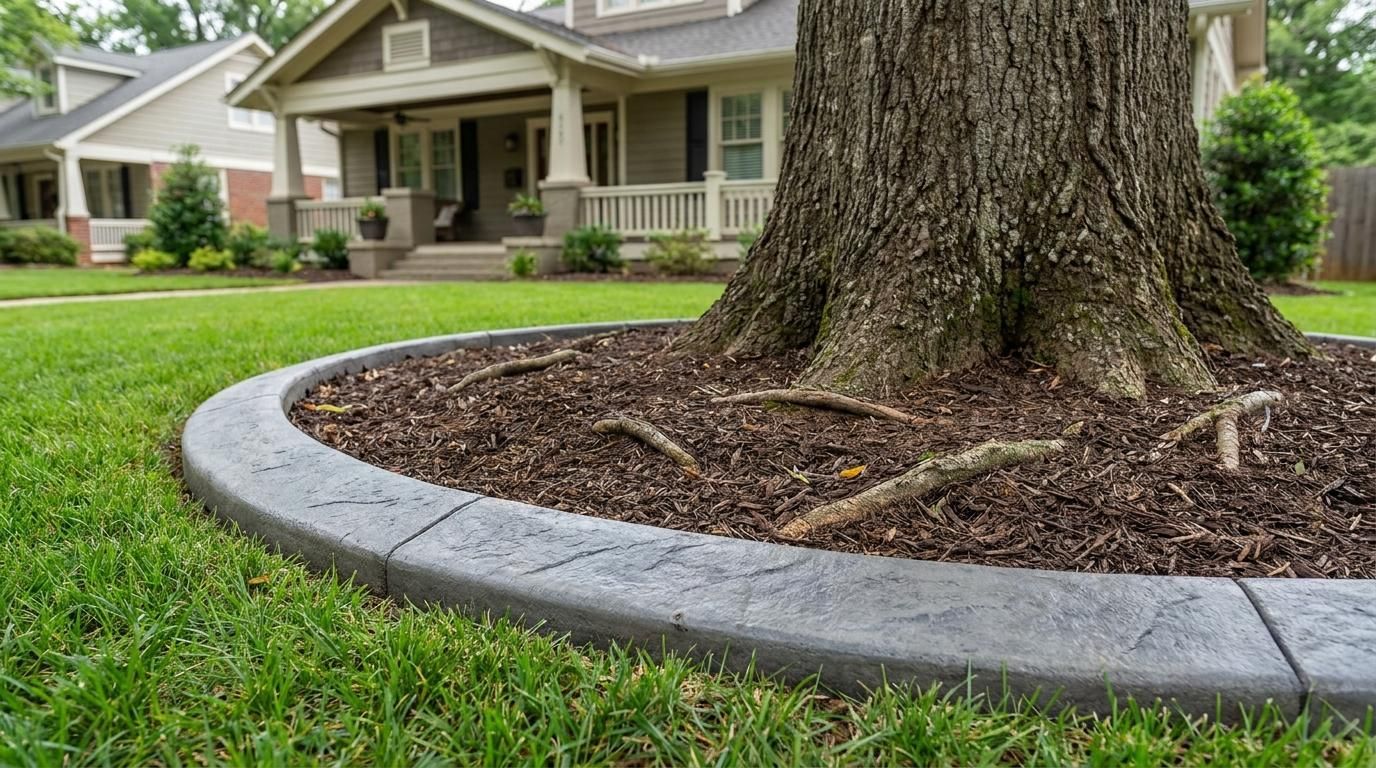
The biggest worry is whether a hard border will damage the tree, and the honest answer is that placement matters more than material. A tree's feeder roots spread wide and shallow, sitting in the top few inches of Charlotte's compacted clay to find air and water. Concrete edging works with that because the ring is extruded along a shallow trench at the border line, not dug under the canopy. The rule is simple: keep the ring outside the trunk's root flare and avoid cutting any root thicker than a garden hose. Everedge crews hand-check the path and protect surface roots and irrigation before extruding, so the finished ring frames the tree without starving it.
How Far From the Trunk Should the Ring Sit?
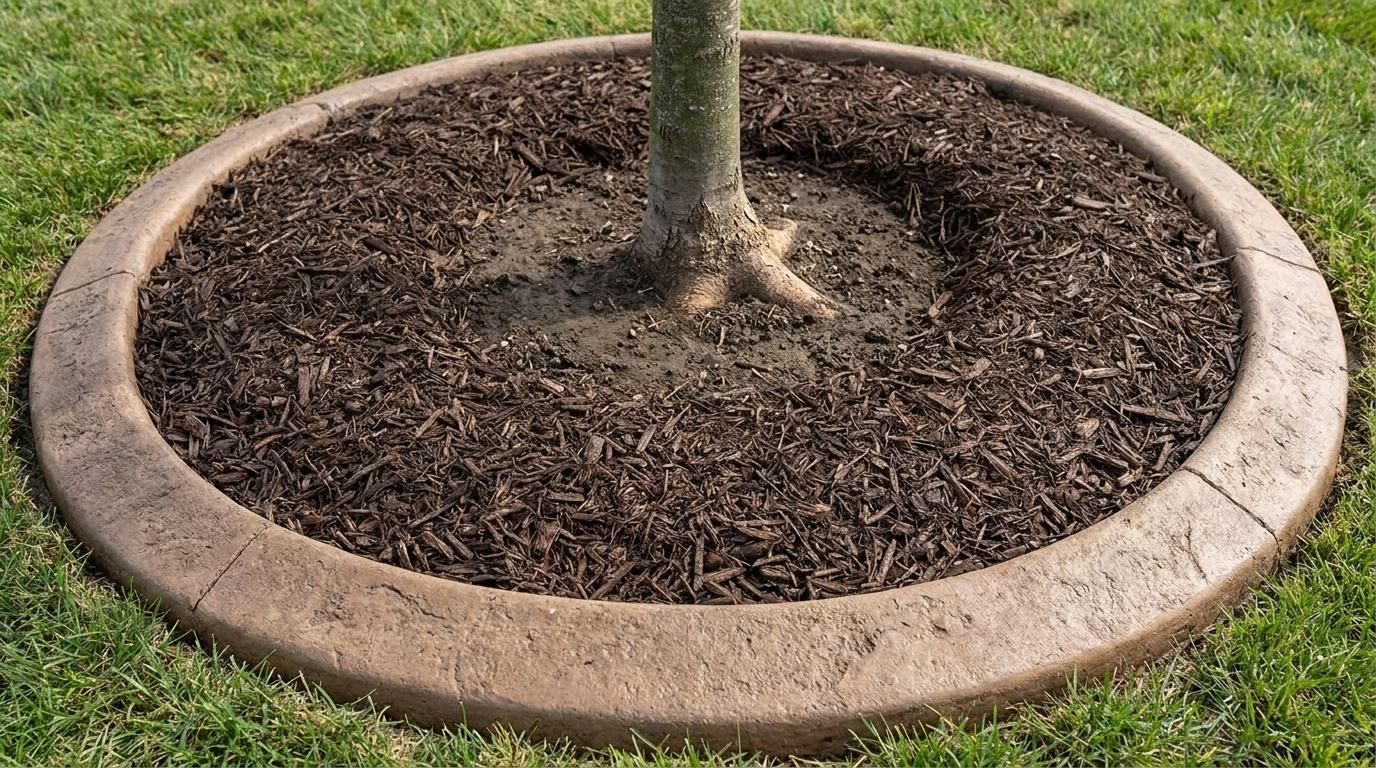
Spacing is the part most homeowners get wrong, and it comes down to protecting the root flare. A few proven proportions keep the ring safe and the tree healthy:
- Set the ring back from the trunk , leaving a few feet of radius for young trees and more for mature shade trees.
- Leave 3 to 6 inches of bare space around the trunk itself , and never let mulch pile against the bark.
- Spread mulch 2 to 4 inches deep in a flat donut , never a mounded volcano that traps moisture and invites rot.
- Slope the grade so summer storm runoff drains away from the trunk rather than toward it.
Get those proportions right and the ring doubles as mulch containment, holding beds in place through Charlotte's summer downpours, the same way durable mulch border designs rely on a solid edge to stay crisp.
Tree Ring Styles and Colors for Charlotte Yards
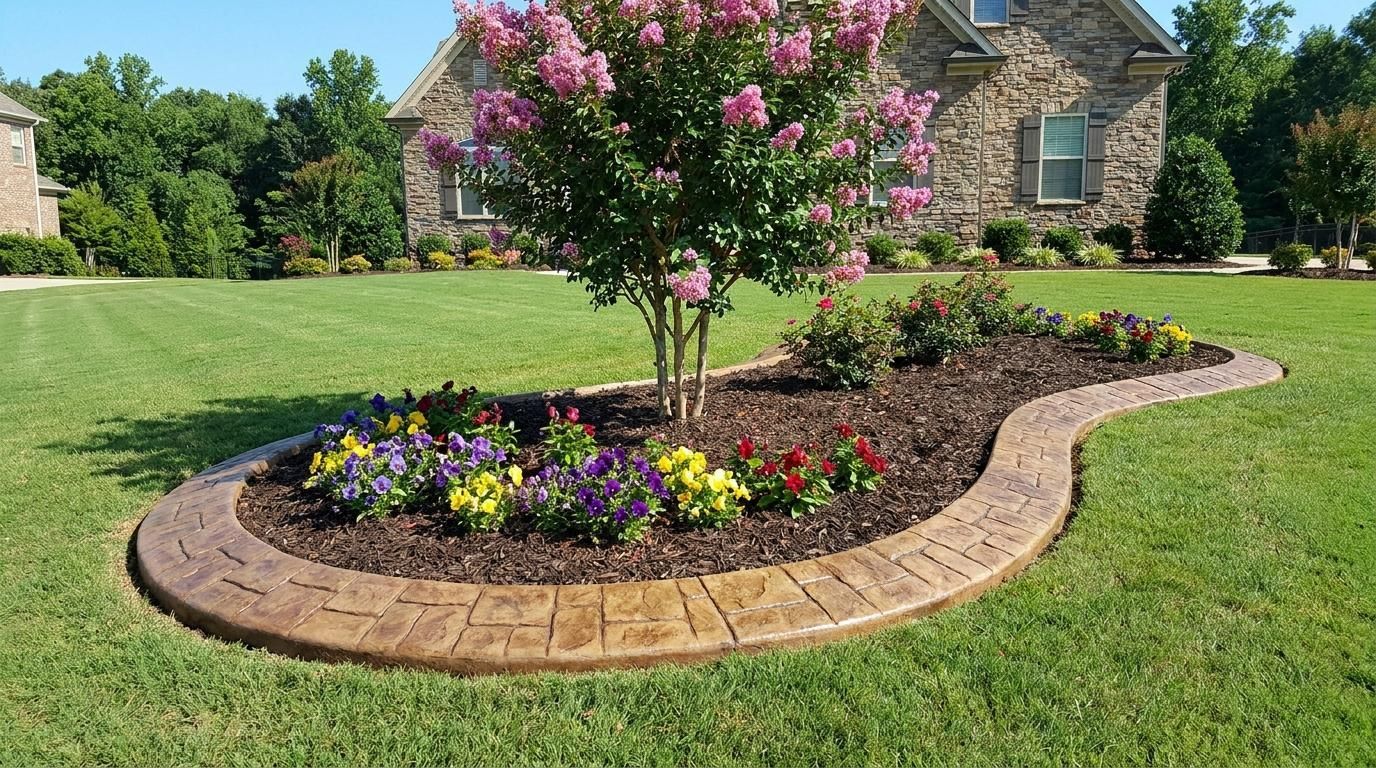
Selecting the right shape, pattern, and color ensures your tree rings enhance your yard's curb appeal while providing a durable, long-lasting border.
Shapes the Ring Can Follow
Because Everedge extrudes each ring in one continuous flow, the border can follow any shape you want: a simple circle around a single oak, a teardrop that trails into a bed, or a freeform island that links several crepe myrtles into one planting. Curves come out smooth and seamless, with no segmented blocks for Bermuda grass to creep between. The same machine that creates curbing around flower beds can seamlessly form tree rings, ensuring a perfectly matched, cohesive look across your entire landscape.
Patterns and Colors for the Ring
Pattern and color tie the ring into the rest of the yard. Stamped textures like Cobble Stone and Castle Rock read as natural stone, and with more than 80 integral colors and release-agent combinations, the border can match your mulch, your home's brick, or your existing beds. Homeowners who want one finish across every bed and tree often repeat it from yard to yard.
Frequently Asked Questions
Is concrete edging around trees a good idea?
Concrete edging around trees is a good idea when the ring sits beyond the root flare and the soil under the canopy stays undisturbed. A well-placed ring gives the tree a clean, mower-friendly border while keeping turf and aggressive grasses out of the mulch. The one exception is very young trees, whose trunks still need a larger starting radius.
How much does a concrete tree ring cost in Charlotte?
A concrete tree ring in Charlotte is priced like other curbing, at roughly $18 to $25 per linear foot, so a small 15- to 20-foot ring sits near the lower end of a project total. The final number depends on the ring's diameter, the pattern, and site access. Everedge provides a free written estimate before any work begins.
Can you put concrete edging around a mature tree?
You can put concrete edging around a mature tree as long as the ring clears the major surface roots. Crews lay out the path by hand and route around any large root instead of cutting through it, which protects the tree's stability and health. For big oaks, a wider or freeform ring keeps the border off the heaviest roots.
Give Your Charlotte Trees a Clean, Defined Border
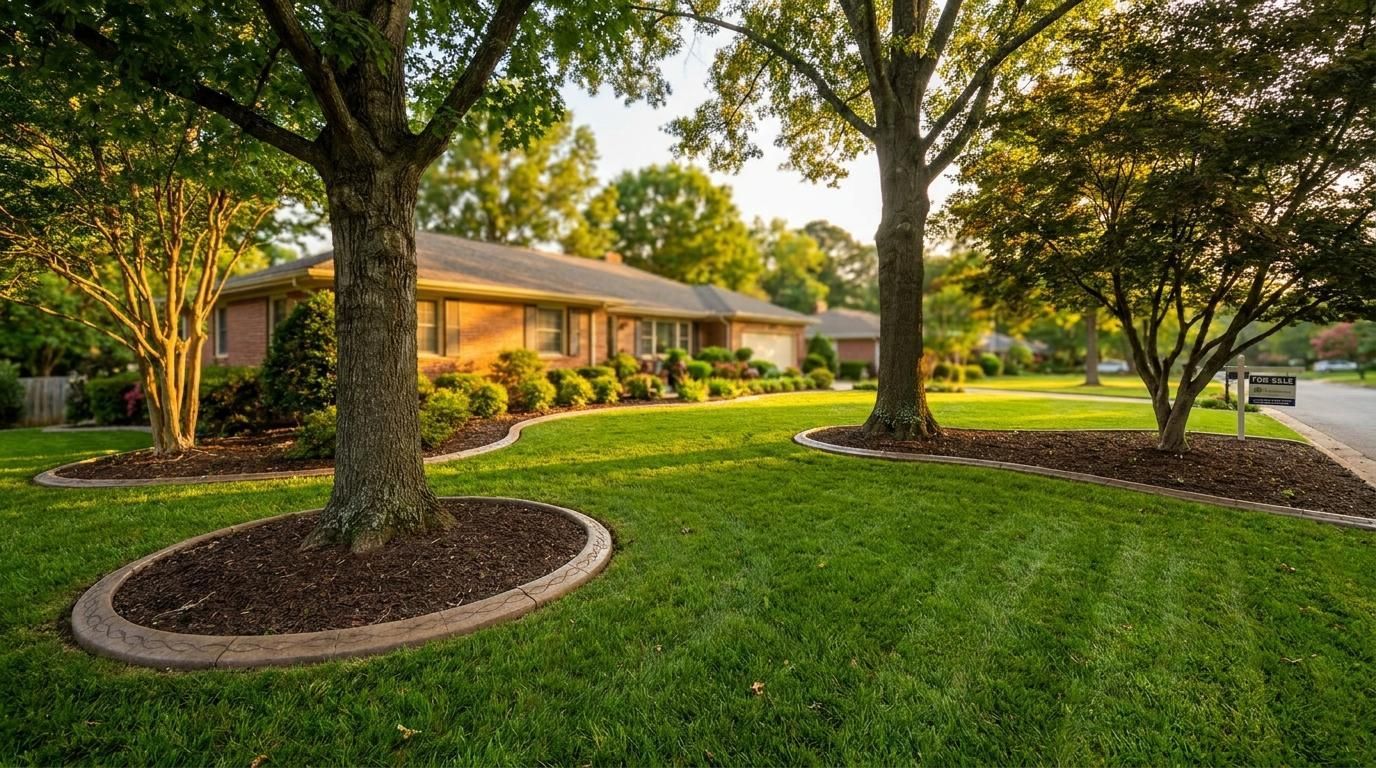
A tree ring is one of the simplest ways to make a yard look sharper, but the details decide whether it helps or hurts the tree. If you keep the border beyond the root flare, hold mulch off the trunk, and pick a pattern and color that match your landscape, you get a clean edge that protects the tree for decades.
If you're considering a permanent concrete tree ring, request a free curbing estimate or call (704) 995-6939 to discuss your project with the Everedge team.