

Mulch Border Ideas: How Concrete Curbing Keeps Landscape Beds Clean
Mulch border ideas range from stacked stone and timber edging to plastic strips and continuous concrete curbing. In Charlotte, the border needs to do more than define a bed line. It needs to keep mulch in place during summer storms that can dump several inches of rain in a single afternoon. Everedge Curbing installs seamless concrete borders across Charlotte that contain mulch, direct water runoff, and hold their shape through every season.
Charlotte averages roughly 43 inches of rainfall per year, with the heaviest downpours concentrated in summer. Without a solid border, that rain pushes mulch onto sidewalks, driveways, and lawns, and homeowners end up replacing material that should have lasted the full season. The good news is that the right border eliminates the problem entirely, and the options below show what works and what doesn't.
Why Mulch Borders Fail in Charlotte
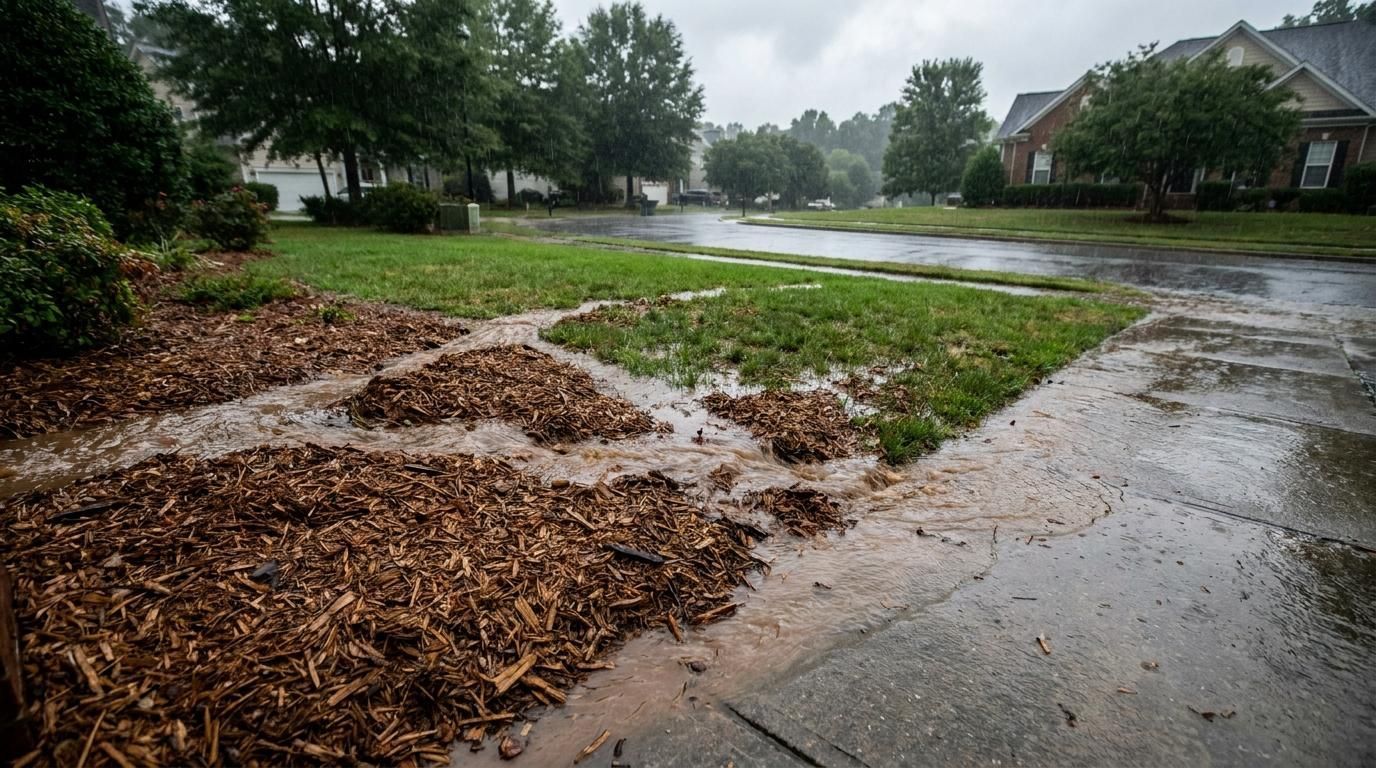
Most mulch washout happens at the edges of the bed, not the center. Lightweight borders like plastic strips and stacked timber sit at or just below grade level. During a heavy rain, water sheets across the lawn and hits the bed edge with enough force to push mulch up and over a two-inch plastic lip. The same rain erodes soil from beneath timber borders, creating gaps where mulch slides out at ground level.
Charlotte's red clay makes this worse. Clay sheds water rather than absorbing it, which increases surface runoff velocity. A storm that drops two inches in an hour creates fast-moving water across clay soil, and any border that sits loosely on the surface gets overwhelmed. Replacing washed-out mulch every summer costs $170 to $250 or more for a standard 200-square-foot bed.
Mulch Borders That Hold Up
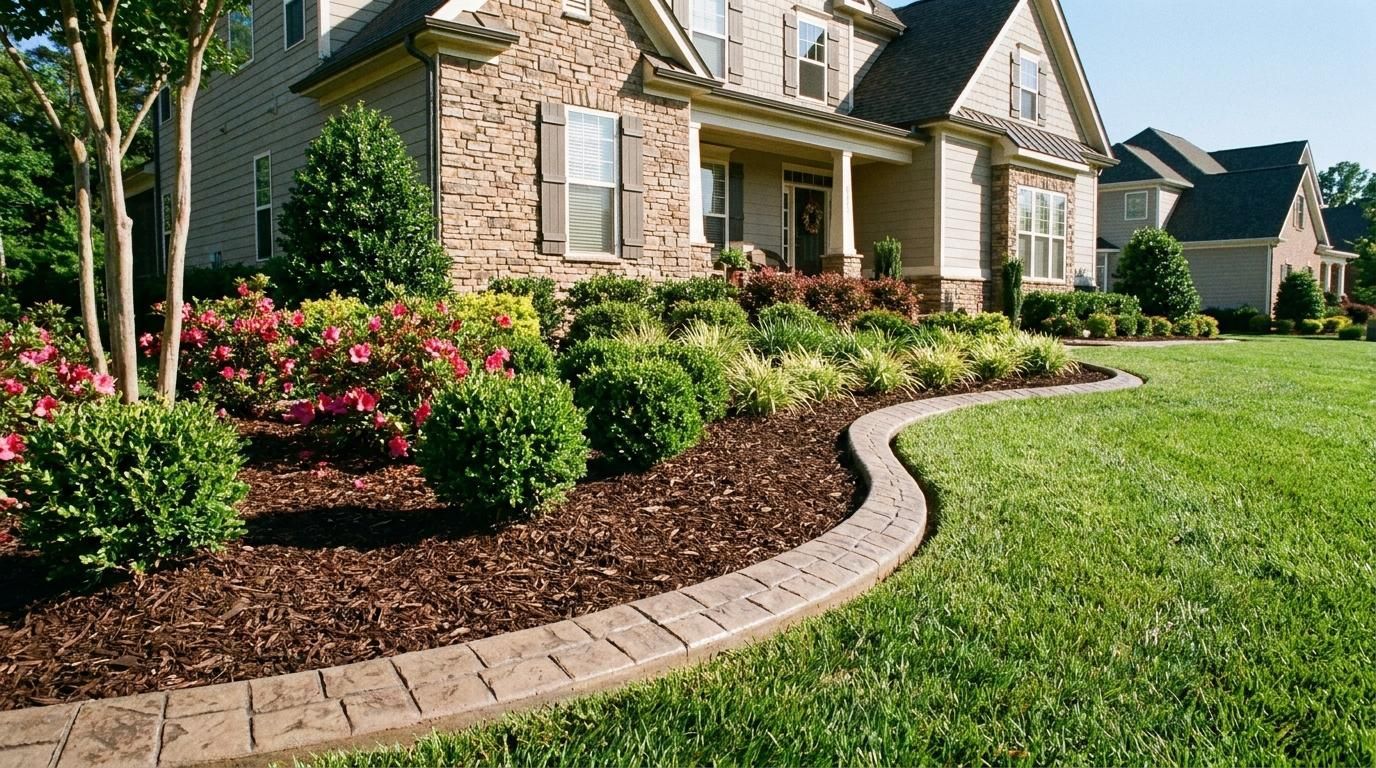
Not every border material fails in Charlotte rain. Here is how the common options compare for mulch containment, ranked by how well they handle storm runoff.
Timber and Landscape Timbers
Pressure-treated timbers provide height but rot over three to five years in Charlotte's humidity. They also shift as the ground beneath them settles, opening gaps at the corners where mulch escapes.
Stacked Stone
Dry-stacked stone looks good and provides some height, but individual stones shift during freeze-thaw cycles and heavy rain pushes mulch through the gaps between them. Re-stacking after every major storm gets old quickly.
Concrete Curbing
Continuous concrete curbing installed by Everedge Curbing is extruded as one seamless piece with no joints or gaps. The curbing sits partially below grade and rises high enough above the bed surface to contain mulch even during heavy downpours. It also directs water along the bed perimeter rather than letting it pool and push material outward.
How Concrete Curbing Keeps Mulch in Place
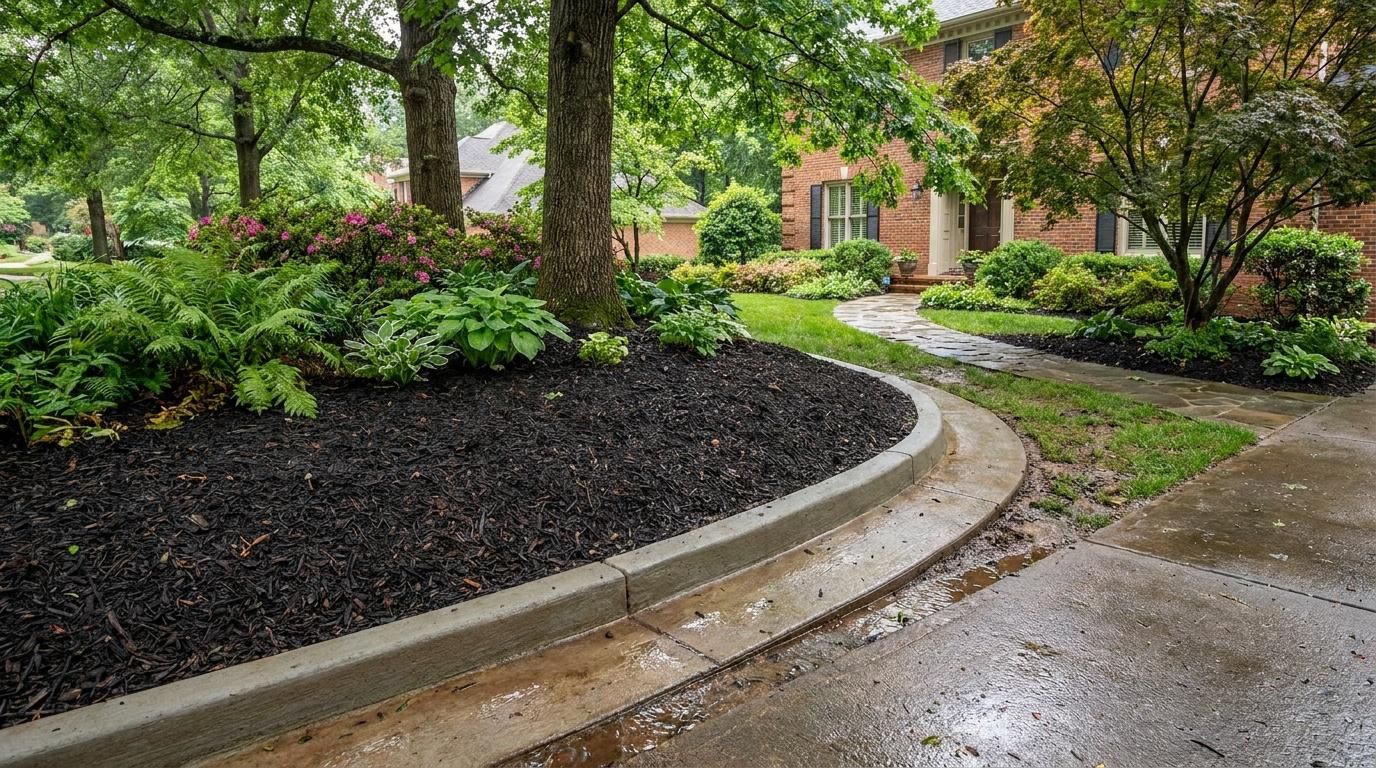
Concrete curbing contains mulch through three mechanisms. First, the continuous seamless profile has no joints for mulch to slip through. Second, the curbing's height above the bed surface blocks lateral migration during wind and rain. Third, the curbing itself directs runoff along the border rather than allowing it to sheet across the bed.
For Charlotte homeowners, this means mulch stays where it belongs through summer thunderstorms, fall leaf cleanup, and spring thaw. The annual cycle of scooping washed-out mulch back into beds and topping off lost material stops. Over three to five years, the savings on mulch replacement alone offset a meaningful portion of the curbing investment.
Frequently Asked Questions
How tall should a mulch border be to prevent washout?
A mulch border should rise at least three to four inches above the bed surface to contain standard mulch depth during heavy rain. Concrete curbing from Everedge Curbing is profiled to provide this height while maintaining a clean, finished appearance.
Does concrete curbing help with drainage around landscape beds?
Concrete curbing improves drainage by directing water along the bed perimeter and away from the home's foundation. The continuous profile prevents pooling at bed edges, which reduces both mulch displacement and soil erosion in Charlotte's clay-heavy yards.
How often do I need to replace mulch with concrete curbing borders?
Most homeowners with concrete curbing borders find they can refresh mulch once per year instead of two to three times, since the curbing prevents storm-related washout. The exact frequency depends on mulch type, bed size, and sun exposure.
Keep Your Mulch Where It Belongs

The best mulch border for Charlotte yards does two jobs: it defines a clean visual line and it keeps material contained through 43 inches of annual rainfall. Temporary options handle the first job. Concrete curbing handles both, and it keeps handling them for decades without needing to be replaced.
Contact Everedge Curbing at (704) 995-6939 or request a free estimate to see how concrete curbing keeps your landscape beds clean year-round.