

DIY Concrete Curbing: What Homeowners Need to Know Before Trying
DIY concrete curbing is possible with rented machines or hand-built forms, but most homeowner projects lack the fiber reinforcement, expansion joints, and mix quality that keep curbing from cracking in Charlotte's clay soil. Everedge Curbing installs continuous, fiber-reinforced borders across the Charlotte area in a single day through our five-step installation process.
Hand-formed borders that look passable in October often crack by the following spring in Piedmont clay. Professionally extruded curbing with fiber reinforcement and properly spaced expansion joints holds clean lines through years of Carolina heat, humidity, and freeze cycles.
What DIY Concrete Curbing Actually Costs
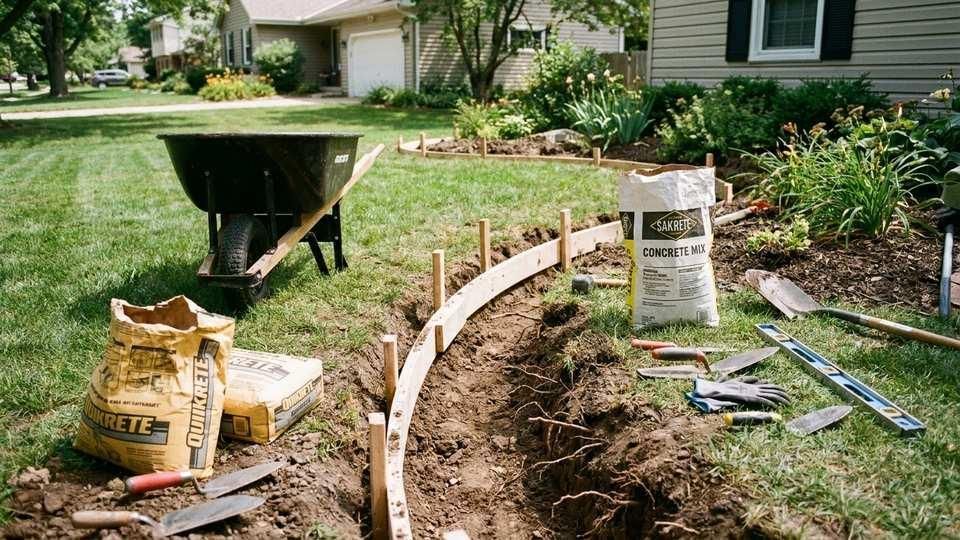
Renting a curbing machine runs $300 to $600 per day in most markets, and availability is limited since few general rental shops carry them. On top of the machine, you'll need:
- Bags of concrete mix at $5 to $7 per 80-pound bag, with a typical front-yard project requiring 30 to 50 bags
- Color additive if you want anything beyond basic gray, at $15 to $40 per batch
- Basic tools include a wheelbarrow, trowel, float, stamp molds, and a garden hose
A 150-linear-foot front-yard project in DIY materials alone costs $400 to $800, plus the $300 to $600 machine rental. That brings the total to $700 to $1,400 for a single day of work with no guarantee on the finish. Professional installation from Everedge Curbing for the same project runs $2,700 to $3,750 at $18 to $25 per linear foot, with fiber reinforcement, integral color, expansion joints, and a one-day timeline included.
Where DIY Curbing Falls Short
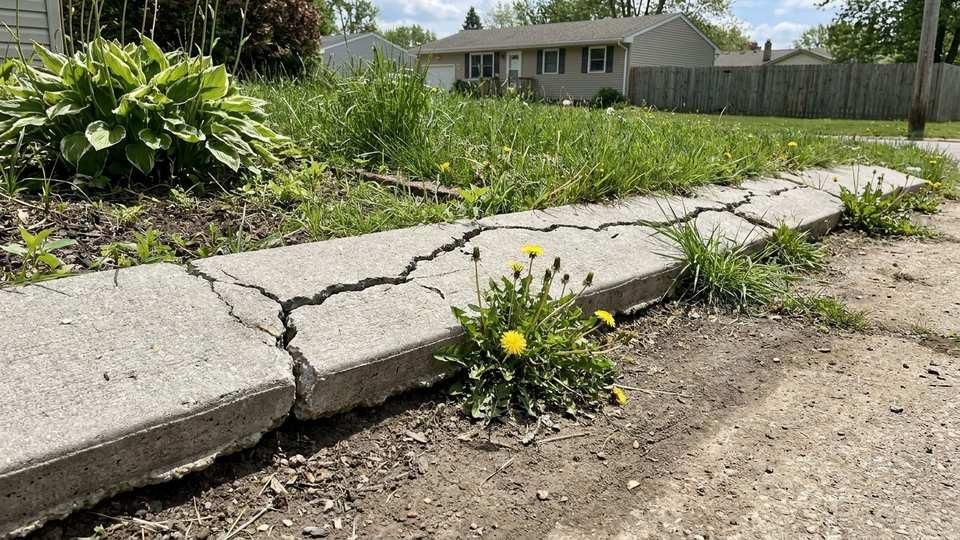
The finished look is only part of the challenge. Most DIY curbing projects fail because of what's missing beneath the surface.
No Fiber Reinforcement
Professional concrete curbing uses a fiber-reinforced mix that resists hairline cracking under temperature swings. Bagged concrete from a hardware store doesn't include fiber reinforcement, and adding it yourself requires precise ratios that change with humidity and temperature on pour day.
Missing Expansion Joints
Charlotte's Piedmont clay expands and contracts with moisture cycles, and concrete curbing needs expansion joints spaced to accommodate that movement. Without them, the curbing cracks where the ground shifts most, typically at corners and transitions between straight and curved sections.
Mix Consistency Issues
Professional installers mix concrete on-site to match the day's specific conditions. DIY projects rely on bagged mix with fixed ratios, and over- or under-watering the mix produces curbing that either slumps during forming or becomes brittle after curing.
When Professional Installation Makes More Sense
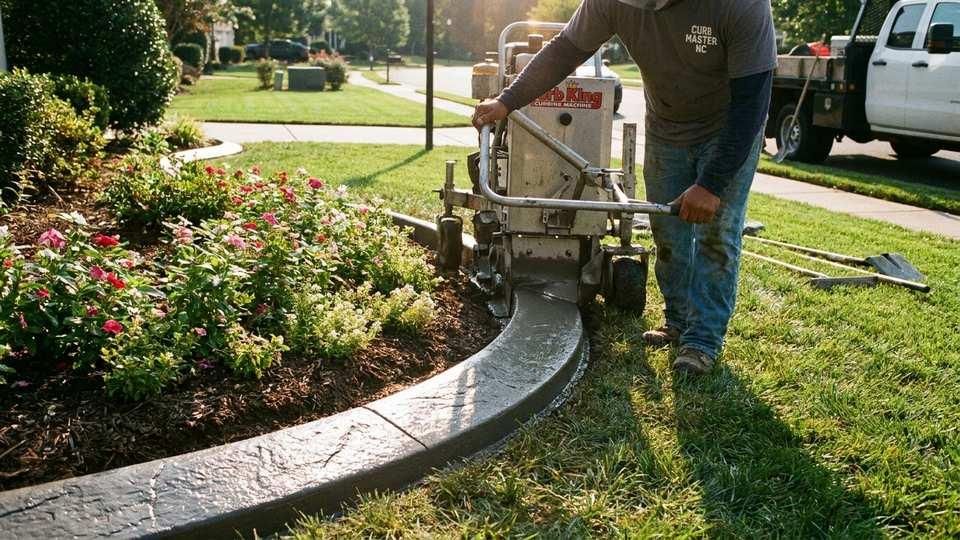
For most Charlotte homeowners, professional installation costs more upfront but delivers a product built to last decades in the Carolinas' climate. Everedge Curbing's process includes on-site concrete mixing with fiber reinforcement, integral coloring through the full body of the curbing, and expansion joints placed specifically for Charlotte's clay soil movement.
The math favors professional work when you factor in risk. A DIY project that cracks within a year means buying the same materials again, plus the labor to remove the failed curbing. A single professional installation at $18 to $25 per linear foot includes over 80 color and pattern combinations, gets completed in one day, and is backed by a team that returns for scheduled resealing every two to three years.
Frequently Asked Questions
Can I build concrete curbing without a machine?
You can build curbing with hand-dug trenches and wooden or flexible plastic forms, but the finish is rougher and joints between form sections create weak points where weeds and grass push through. Machine-extruded curbing from a professional installer like Everedge Curbing produces a continuous, seamless border with no joints along the entire run.
How long does DIY concrete curbing last compared to professional?
DIY curbing without fiber reinforcement or proper expansion joints typically shows cracking within one to three years in Charlotte's climate. Professionally installed curbing with fiber reinforcement and professional-grade sealer holds up for decades with basic maintenance, including rinsing occasionally and resealing every two to three years.
Is it cheaper to do concrete curbing yourself?
DIY materials and machine rental total $700 to $1,400 for a typical front yard, compared to $2,700 to $3,750 for professional installation of the same footage. The upfront savings disappear if the curbing fails and needs replacement, which is common without fiber reinforcement and expansion joints in Charlotte's Piedmont clay.
The Smarter Path to Permanent Landscape Borders
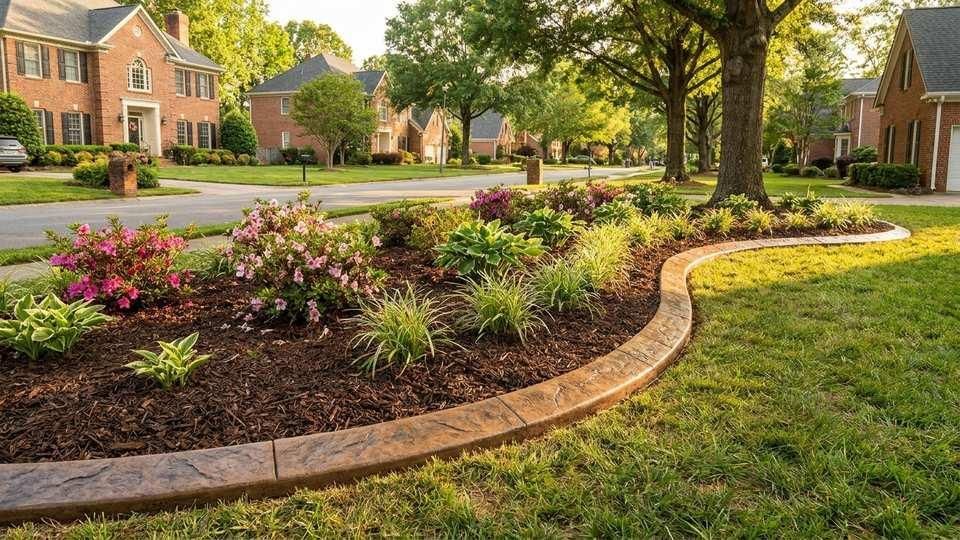
DIY concrete curbing can work as a weekend project, but Charlotte's clay soil, humidity, and temperature swings make long-term durability the real test. When the goal is landscape borders that hold clean lines for decades with minimal upkeep, professional installation delivers what hand-formed methods can't: fiber reinforcement, seamless extrusion, and a sealer system built for the Carolinas.
Contact Everedge Curbing at (704) 995-6939 for a free estimate on your curbing project.