

Concrete Curbing Patterns: A Visual Guide
Concrete curbing patterns are stamped textures pressed into wet concrete as the border is extruded, so a plain gray edge comes out looking like cobblestone, brick, slate, or wood grain instead. Because the texture is set while the concrete is still soft and then sealed in, the look is permanent, it doesn't wear off the way a surface coating eventually would.
Walk any established Charlotte neighborhood and the difference is easy to spot: some beds are ringed by a flat, featureless lip, while others have a border that catches the light like real stacked stone. That texture is the whole point of a stamped pattern, and picking one is the fun part of planning decorative concrete curbing. With more than ten stamp patterns to choose from, all finished in your choice of color, Everedge Curbing gives Charlotte homeowners enough range to match almost any house. In this blog post, we cover the most popular patterns, how they're pressed into the concrete, and how to match one to your home.
The Most Popular Concrete Curbing Patterns
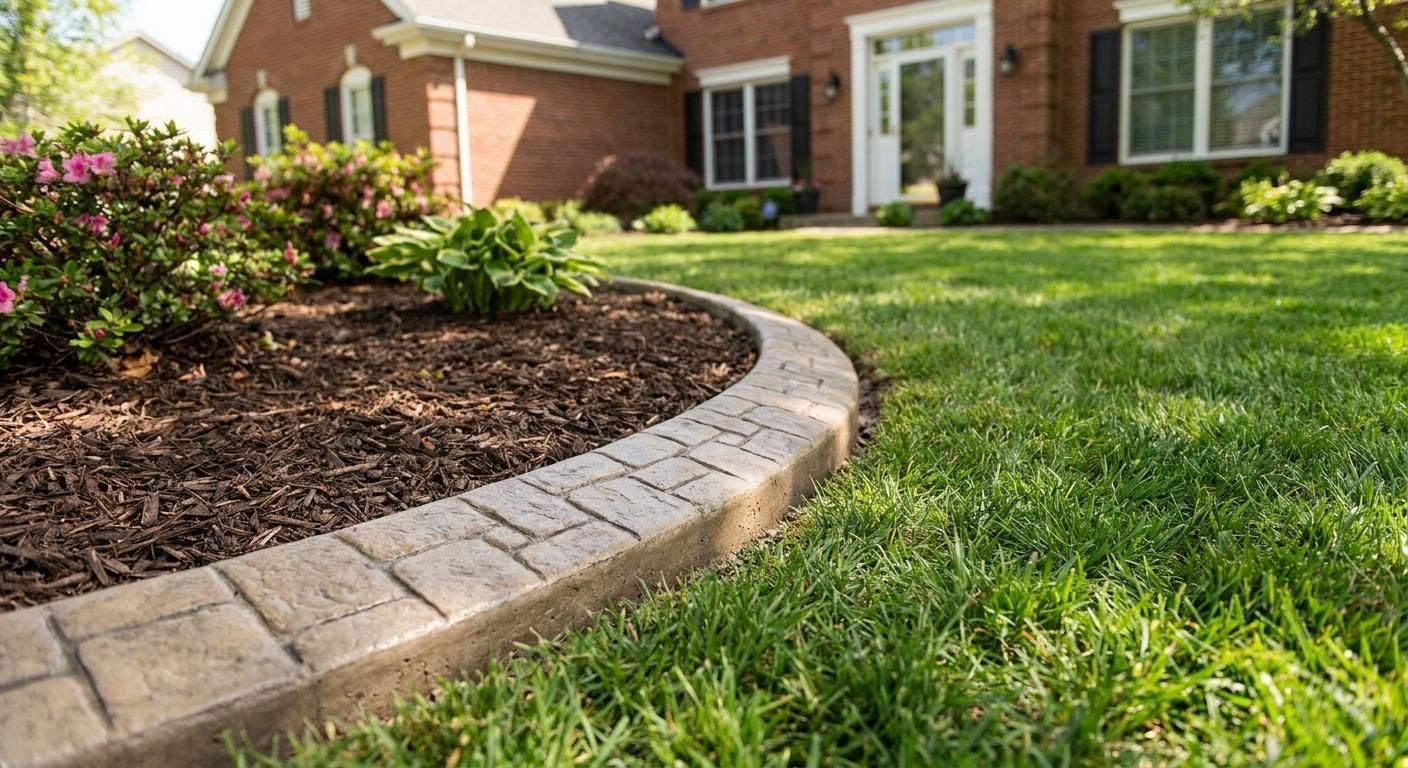
Most homeowners gravitate toward a handful of stamps that mimic natural stone or masonry. These are the patterns Everedge installs most often around Charlotte beds and trees:
- Cobble Stone and Castle Rock read as rounded, fitted fieldstone and suit traditional brick homes.
- Random Rock and Natural Stone give a more irregular, quarried look for naturalistic landscapes.
- H Brick and Soldier Course echo classic laid brick, a clean match for Charlotte's many brick facades.
- Wood Grain and Hand Hewn Wood mimic timber edging without the rot that real wood faces in Carolina humidity.
- Spanish Tile and Flagstone add a flatter, tiled texture for patios and walkway accents.
Because the same crew can run any of these in a single visit, you are choosing purely on looks, not on price or install time. Seeing samples of finished work helps, which is why it pays to browse through our gallery of curbing project photos before committing to a stamp.
How Stamped Curbing Patterns Are Created
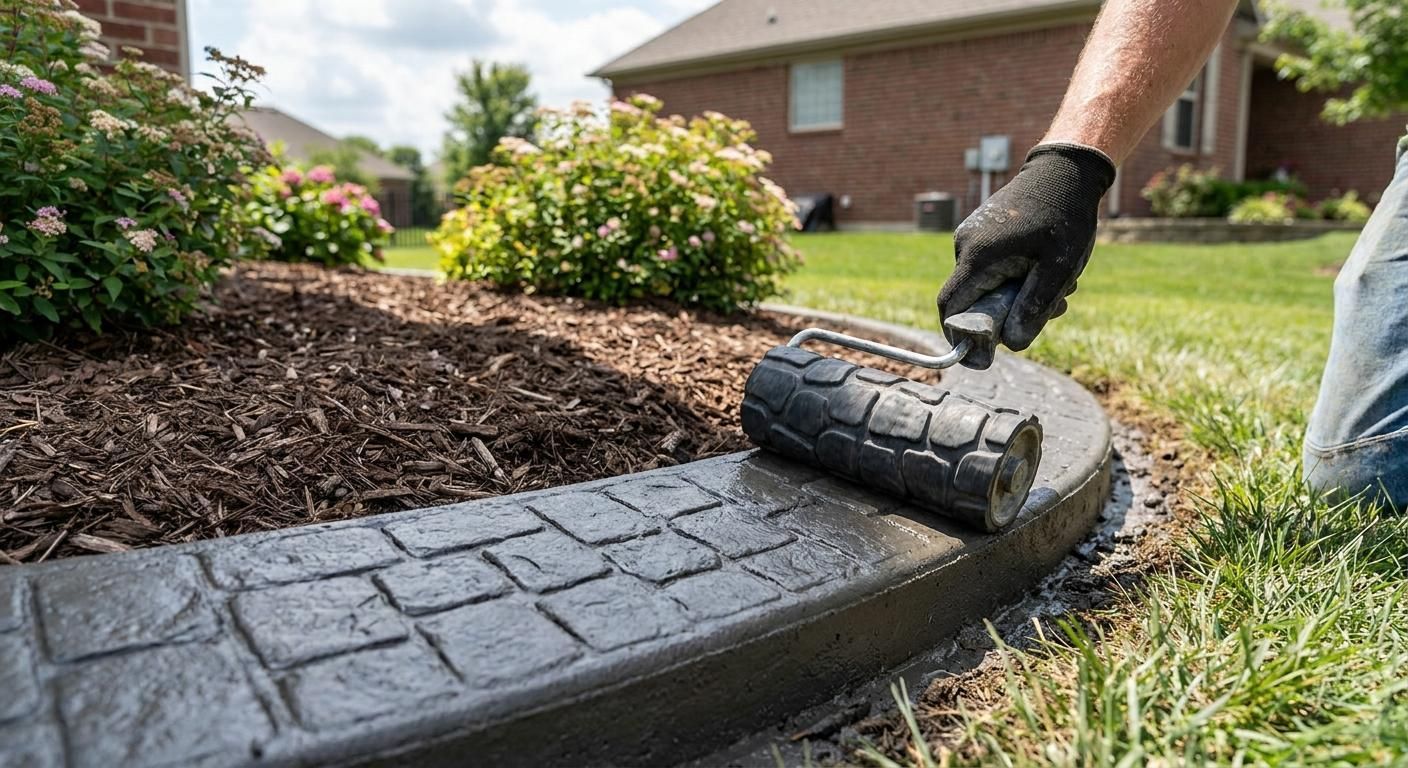
The pattern is formed in the concrete itself during the one-day installation process. A curb machine extrudes a continuous ribbon of concrete along your bed line, and while that ribbon is still soft, the crew presses a textured roller or stamp along its surface. A release agent dusted on first keeps the stamp from sticking and adds a secondary, weathered tone to the texture. Once the concrete cures and is sealed, the pattern is locked in for the life of the curb. Because the border is extruded in one continuous flow rather than poured into segmented forms, the stamped texture wraps smoothly around curves with no seams or joints for grass to invade.
Matching Patterns and Colors to Your Charlotte Home
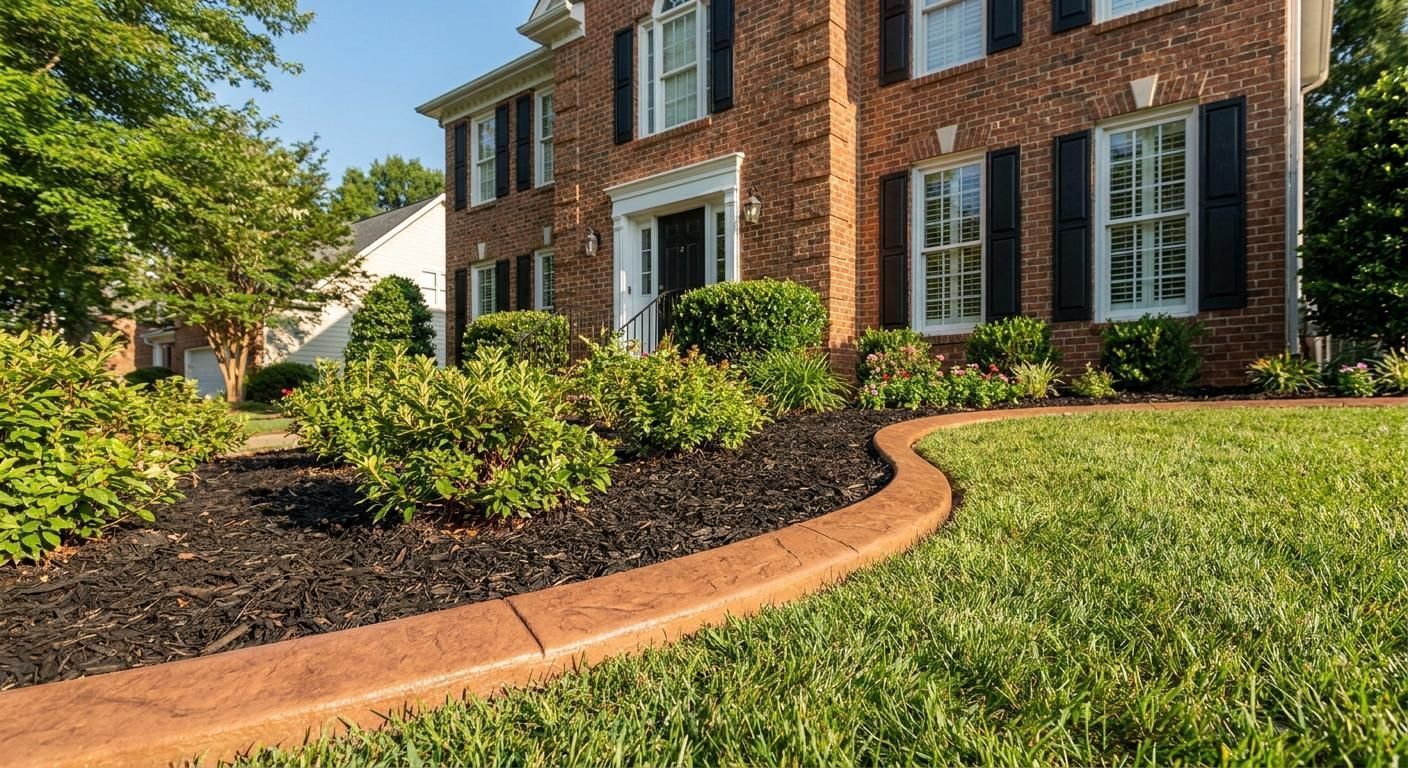
A pattern only works if its color ties into the rest of the property, and this is where the system gets flexible. Everedge offers over 80 color options between integral pigments and release-agent tones, so a single stamp can be finished dozens of ways.
The simplest approach is to pull a color from something permanent on the property. A few reliable pairings:
- Match the curbing to your home's brick or stone so the border reads as part of the architecture.
- Pull an earth tone from your mulch or hardscape to keep beds looking unified.
- Choose a contrasting charcoal or terracotta when you want the border to frame and define the lawn.
Pattern and color are picked together at the estimate, so you can see how a Cobble Stone in a warm tan reads differently than the same stamp in slate gray before any concrete is run.
Frequently Asked Questions
How many concrete curbing patterns are there to choose from?
Everedge offers more than ten stamp patterns, including Cobble Stone, Castle Rock, Random Rock, Natural Stone, H Brick, Soldier Course, Wood Grain, Hand Hewn Wood, Spanish Tile, and Flagstone. Each can be finished in any of 83 color combinations, so the practical number of looks runs into the hundreds.
Do stamped curbing patterns cost more than plain concrete?
Stamped patterns are part of the standard curbing service, priced in the same $18 to $25 per linear foot range as a plain finish. The stamp is applied during the one-day install, so a textured border does not add a separate labor stage or a premium for most patterns.
Will a stamped concrete pattern fade over time?
The color is integral to the concrete rather than a surface paint, so the pattern holds its tone for years. Resealing every two to three years refreshes the finish and protects it from Charlotte's summer UV, keeping the texture and color crisp.
Find the Curbing Pattern That Fits Your Yard
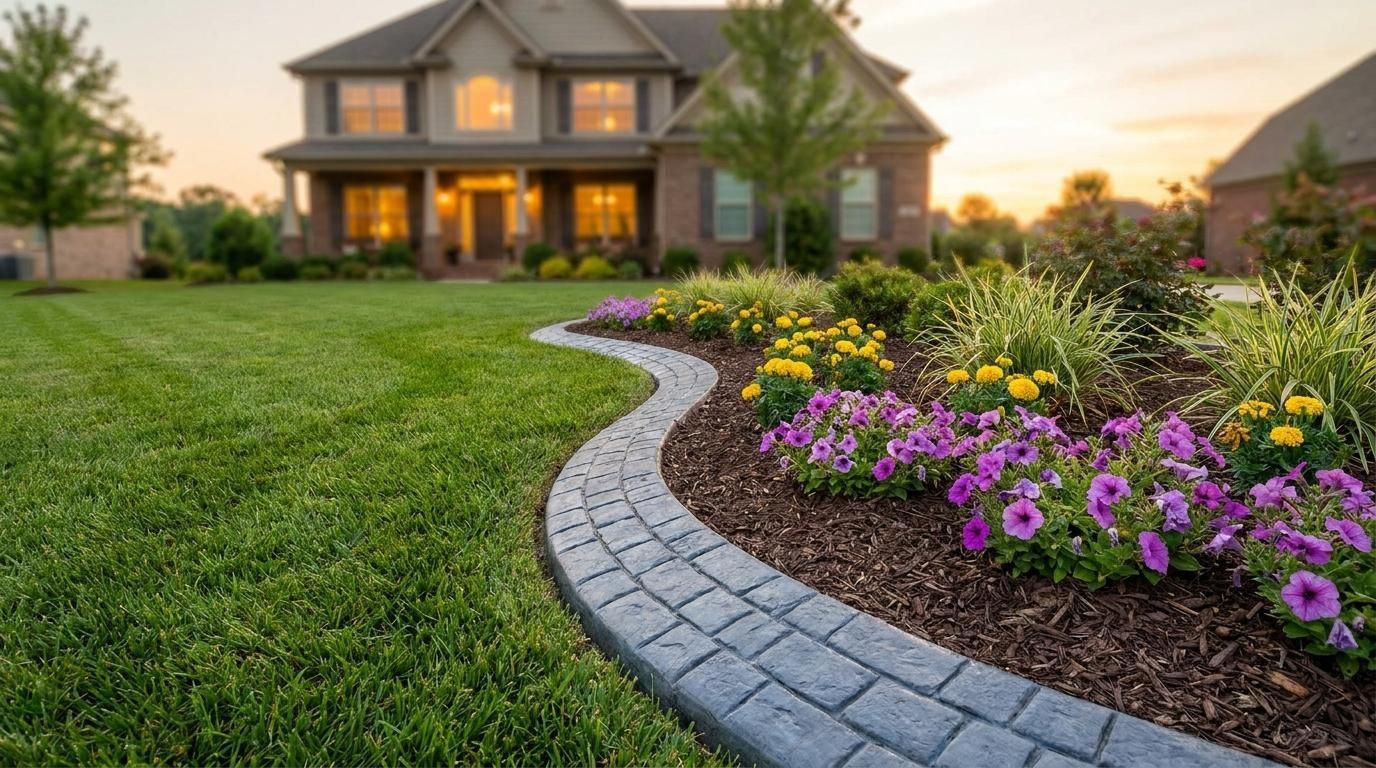
The right pattern looks like it was always meant to be there, echoing your brick, your stone, or the natural texture of your beds. With more than ten stamps and dozens of colors to combine, there’s a finish for traditional, modern, and naturalistic Charlotte yards alike, all installed in a single day.
Ready to see a stamp in your preferred color? Request a free curbing estimate or call (704) 995-6939 to explore the patterns with the Everedge team.