

How to Keep Grass Out of Flower Beds (Especially Bermuda Grass)
To keep grass out of flower beds, you need a physical barrier the grass can’t grow over or under. The most reliable option is a solid, continuous border set into the bed line. Hand-pulling, spraying, and shallow plastic edging slow Bermuda grass for a season but rarely stop it, because none of them address how grass actually spreads. Everedge Curbing installs continuous concrete borders across Charlotte that gives beds a clean, permanent edge that grass struggles to cross.
It’s tempting to treat invading grass as a weeding problem and just pull what you can see, but that’s fighting the symptom instead of the cause. Bermuda grass spreads through runners that travel along the surface and just beneath it, so it simply regrows over any shallow edge unless something stands in its way, which is exactly what a permanent concrete curbing border is. Why does Bermuda beat the usual fixes, and what finally stops it? Here’s what works and what only looks like it does.
Why Bermuda Grass Keeps Invading Charlotte Flower Beds
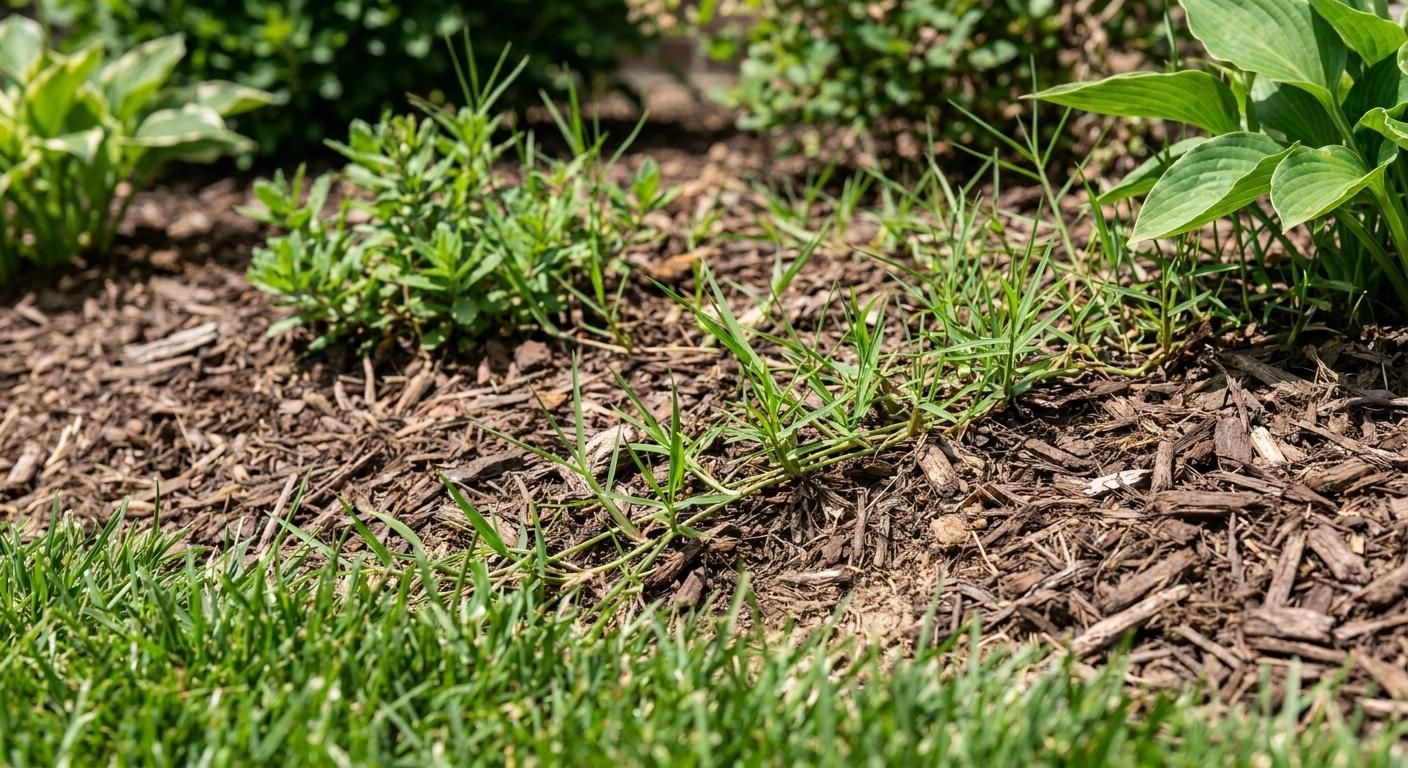
Bermuda grass dominates Charlotte lawns because it thrives in exactly the heat and humidity our summers deliver, and that same vigor is what drives it into your beds. It spreads two ways at once: above-ground stolons that creep across the soil surface and underground rhizomes that travel just beneath it. Both send down roots wherever they touch, so a single runner can colonize a bed in weeks. Once it reaches loose, watered, mulched soil, it grows even faster than it does in the lawn.
That is why a bed that looked clean in April can have green blades pushing up between the perennials by midsummer. Understanding how Bermuda grass spreads is the key to stopping it. It tells you the fix has to block the runners, not just remove the blades. The most reliable way to do that is with a permanent border designed around your beds, like the options in our guide to curbing around flower beds.
Why Pulling, Spraying, and Plastic Edging Fall Short
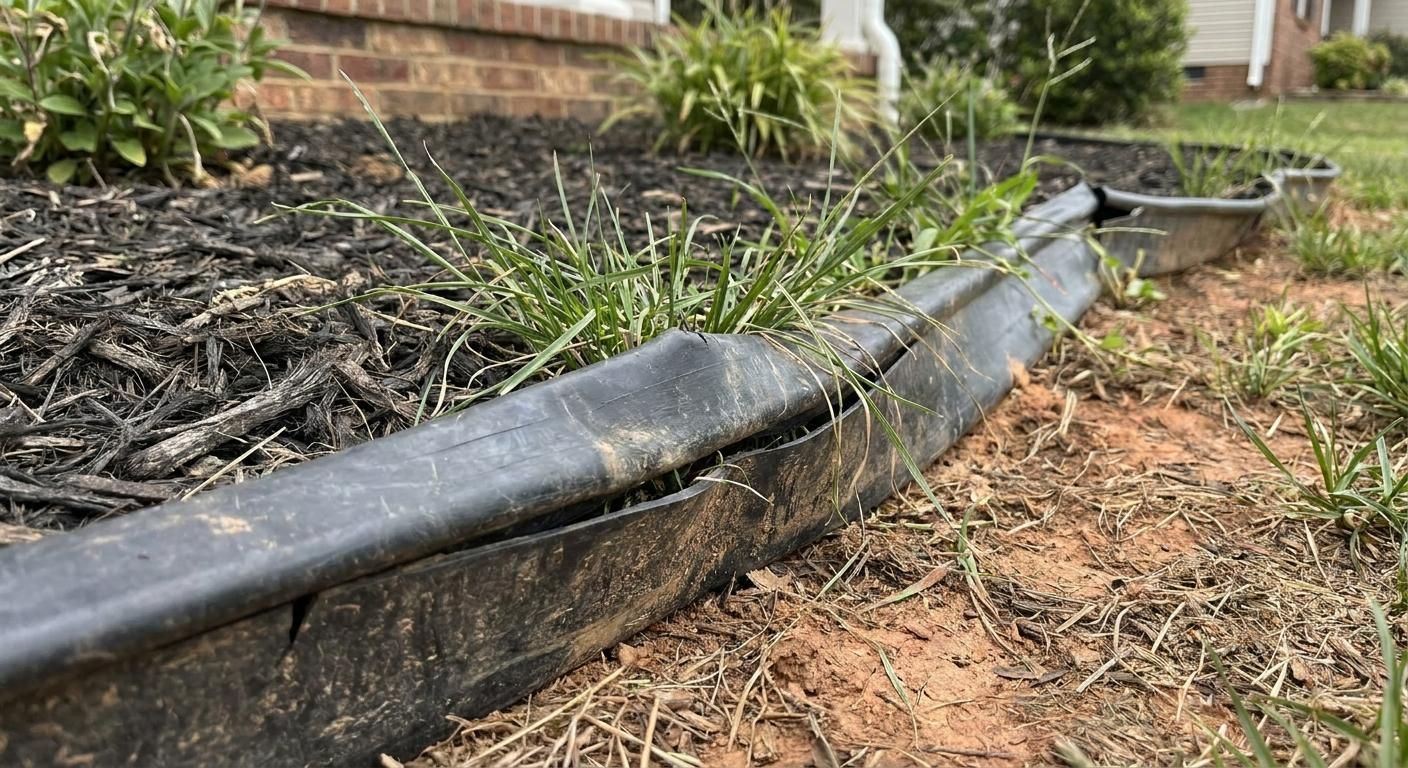
Most common fixes target the grass you can see and ignore the runners feeding it, so the relief is temporary:
- Hand-pulling snaps the rhizome and leaves fragments behind, and each fragment can resprout into a new plant.
- Spraying kills the visible blades but new runners from the lawn side simply re-enter the bed within weeks.
- Plastic and metal edging sits too shallow and heaves over time, leaving gaps that stolons walk right over.
- Deepening the mulch only gives surface runners a softer, richer place to root.
These traditional quick fixes only treat the symptoms of an invasion rather than the cause. Because they fail to create a deep, unbroken barrier, aggressive lawn invaders like Bermuda grass will always find a way through, over, or under them. To permanently protect your landscaping, you have to move past temporary maintenance habits and invest in a structural boundary that stops the runners completely.
How a Concrete Border Stops Grass for Good
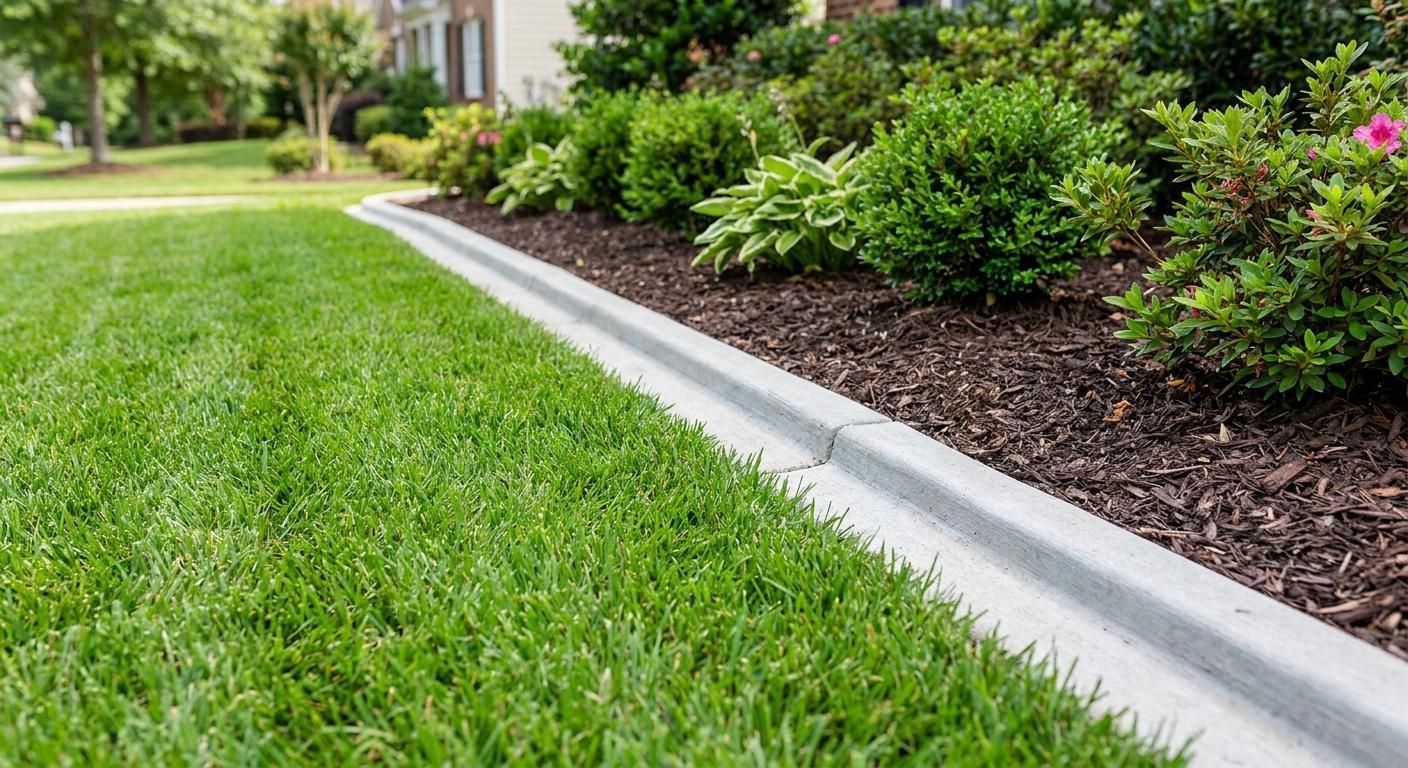
A continuous concrete curb works where the other fixes fail because it’s solid, seamless, and set into the ground rather than laid on top of it. The raised lip stops surface stolons cold, giving them no soil to root into as they try to cross, while the depth of the border blocks the shallow rhizomes that do most of the bed-invading. Because the curb is extruded as one unbroken piece, there are no joints or seams for a runner to slip through, the way it does between plastic stakes or paver blocks.
This is what sets it apart from the usual garden bed edging ideas that stop bermuda grass. Most rely on a barrier that's either too shallow or too segmented to hold the line. The border also creates a clean mowing edge, so you can run a wheel right along it and cut the lawn-side grass before it ever reaches the bed. The result is a line the grass has to fight instead of stroll across.
Frequently Asked Questions
What is the best way to keep Bermuda grass out of flower beds?
The most durable method is a solid, continuous border set into the bed line, such as concrete curbing, paired with a clean mowing edge. The barrier blocks the surface and shallow runners Bermuda uses to spread, and the mowing edge lets you cut back the lawn side before it reaches the bed. Spraying and pulling help short-term but do not stop the runners.
Does plastic edging keep grass out of flower beds?
Plastic edging helps at first but rarely keeps grass out for long. It sits shallow, heaves in Charlotte's clay as the soil expands and contracts, and leaves gaps at its seams that Bermuda stolons cross easily. A continuous, set border holds the line longer.
Will concrete curbing completely stop grass from entering beds?
Concrete curbing stops the surface runners entirely and blocks the shallow rhizomes that cause most bed invasion, which dramatically reduces the grass that gets through. Paired with regular mowing along the edge, it keeps beds far cleaner than any shallow edging, though no border replaces basic upkeep entirely.
Stop Fighting the Grass. Set a Real Barrier

The reason grass keeps winning is that most fixes treat the blades instead of the runners. Block the way Bermuda actually spreads with a solid, continuous border, and you stop fighting the same battle every summer, trading weekly weeding for a clean edge that holds for years.
Tired of pulling grass out of your beds? Request a free curbing estimate or call (704) 995-6939 to put a permanent edge between your lawn and your beds with the Everedge team.