Landscape Edging Types: A Complete Comparison Guide
Landscape edging types fall into a handful of categories: plastic, wood, metal, brick or paver, natural stone, and concrete curbing. Each trades cost against lifespan and upkeep. The cheapest options can be installed in an afternoon but need replacing in a few years. The more permanent ones cost more upfront and hold their line for decades. Everedge Curbing installs continuous concrete curbing in Charlotte, one of the longest-lasting borders on that list.
If you’re bordering your beds, you’re really weighing two ends of one spectrum: a budget edging you can drop in this weekend against a permanent border a crew installs in a day, with several materials sitting in between. Each has a place, but they age very differently in Charlotte's clay and heat, which is the real argument for professionally installed concrete curbing in Charlotte.
How do the types compare on price, durability, and looks, and which one fits your yard? Keep reading for the full breakdown.
The Main Types of Landscape Edging
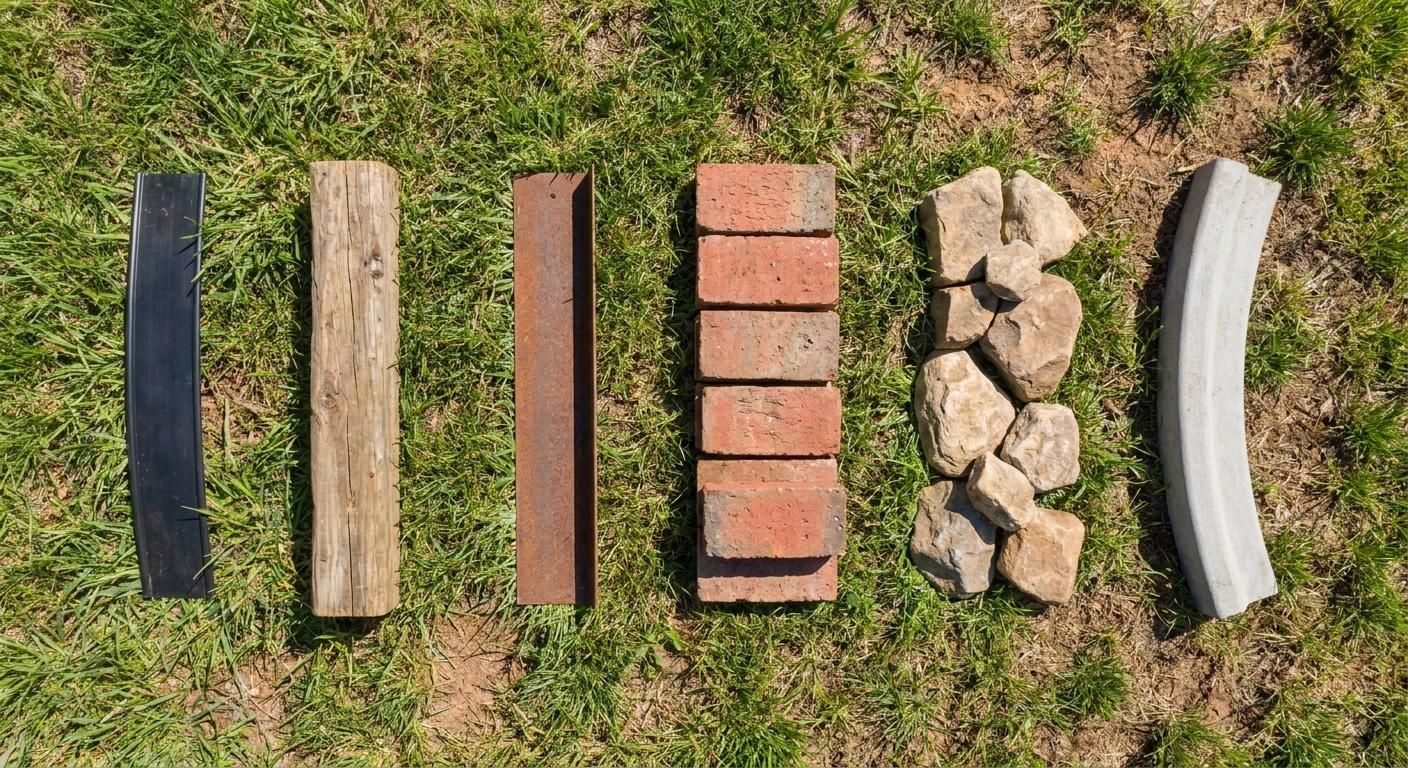
Most borders sold today fall into one of six families, each aimed at a different mix of budget and permanence:
- Plastic and rubber edging is the cheapest and easiest to install, but the thinnest and shortest-lived.
- Wood and timber edging looks natural and warm, yet rots and warps in Carolina humidity.
- Metal edging, steel or aluminum, gives a crisp modern line that can rust or dent over time.
- Brick and paver edging is classic and solid but relies on joints that shift and let weeds through.
- Natural stone is the most premium and durable, at the highest cost and with the most labor.
- Concrete curbing is extruded as one seamless, custom-shaped border that lasts for decades.
Landscape Edging Types Compared
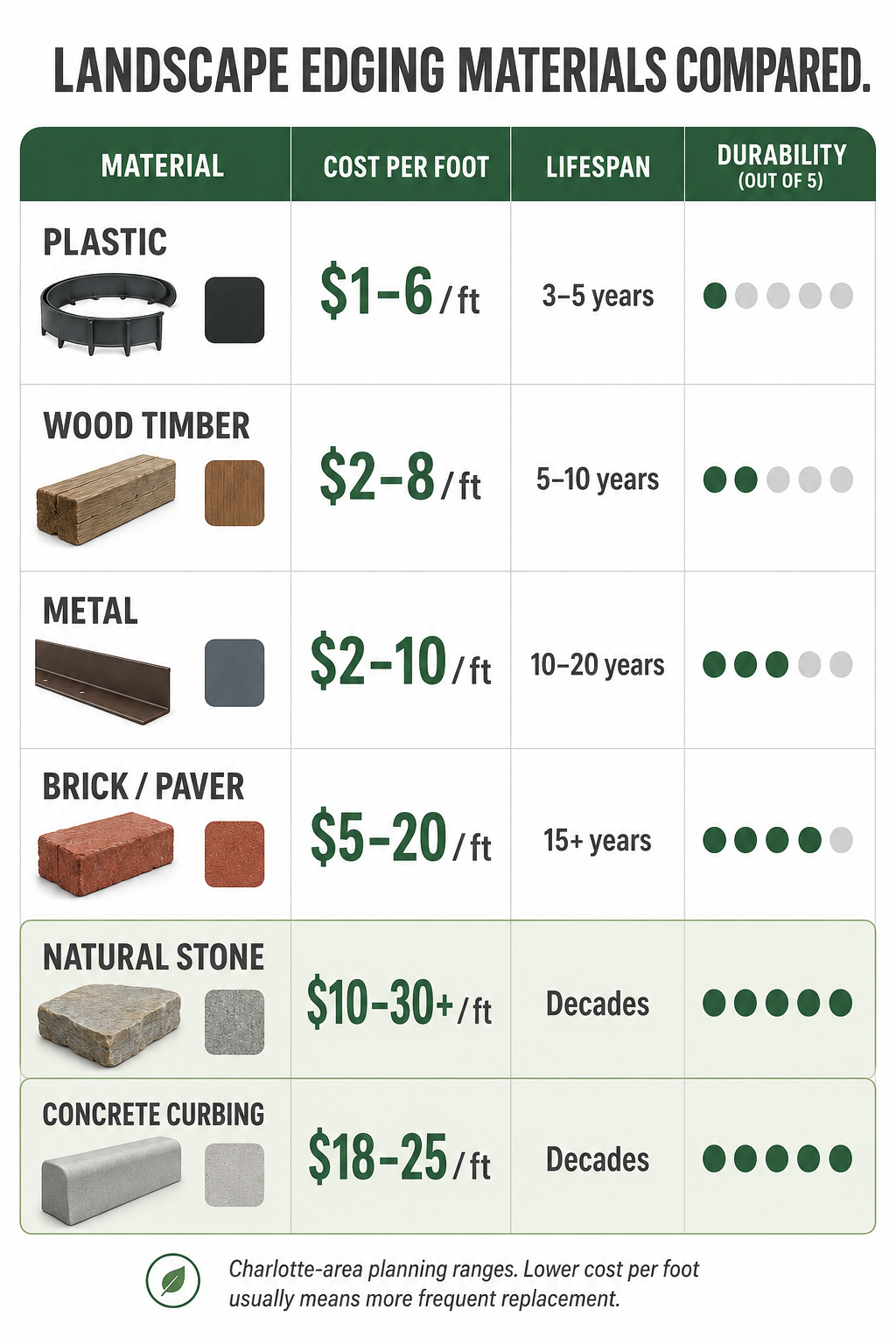
Side by side, the trade-off is consistent: the less you spend per foot, the sooner you replace it. Charlotte prices run a little above the national average because of demand, so use these figures as planning ranges:
| Edging Type | Cost / Foot | Lifespan | Upkeep |
|---|---|---|---|
| Plastic | $1-6 | 3-5 years | Warps and heaves; replace often |
| Wood timber | $2-8 | 5-10 years | Rots in humidity |
| Metal | $2-10 | 10-20 years | Can rust or dent |
| Brick / paver | $5-20 | 15+ years | Joints shift, weed gaps |
| Natural stone | $10-30+ | Decades | High cost, joints |
| Concrete curbing | $18-25 | Decades | Reseal every 2-3 years |
For a deeper look at how each option behaves over time, see the top edging materials for landscape edging in Charlotte.
Which Edging Type Fits a Charlotte Yard?
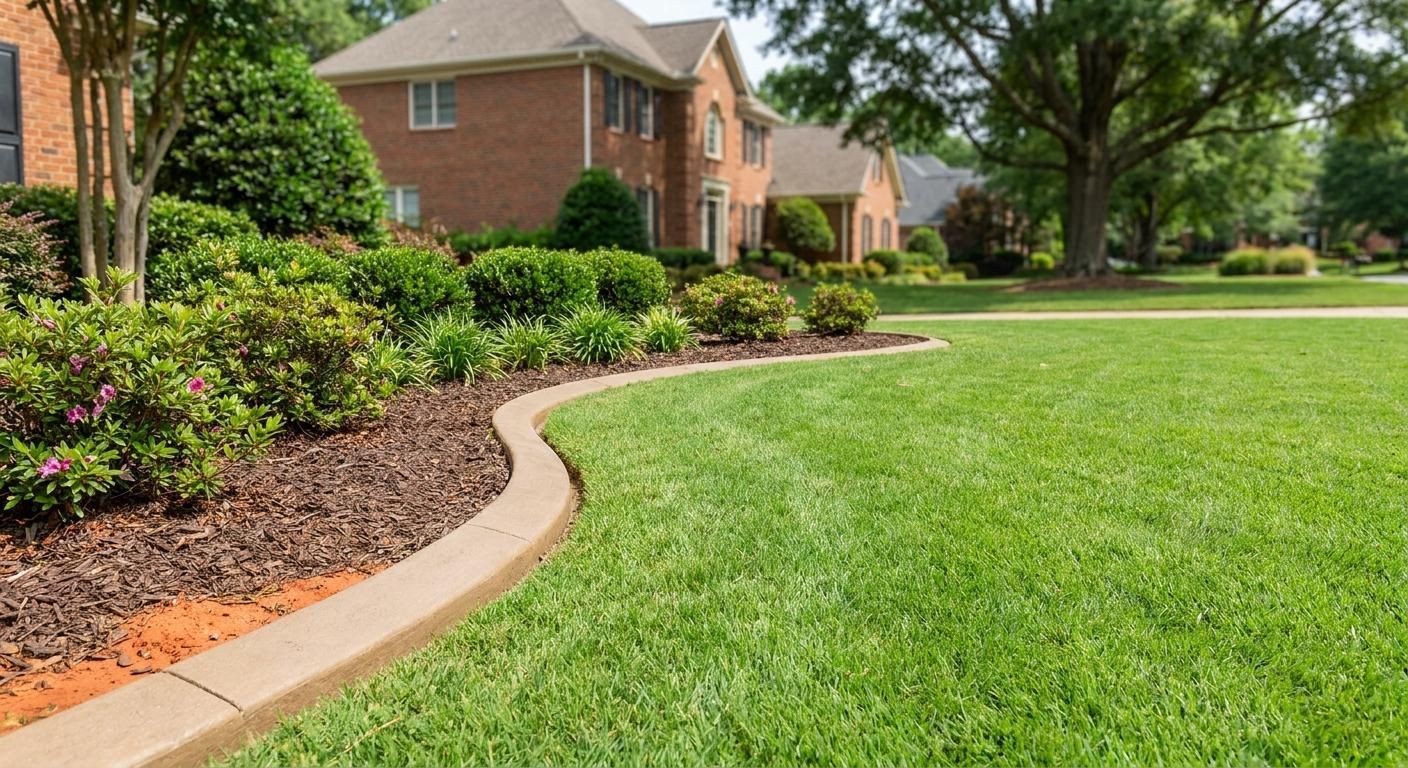
Charlotte's growing conditions push the decision toward the permanent end of the list. The Piedmont's red clay expands and contracts with moisture, which heaves shallow plastic and brick edging out of line; the summer heat and humidity rot wood and feed aggressive Bermuda grass that exploits any joint. A seamless concrete curb answers all three at once: it is set deep enough to resist heaving, it will not rot, and it has no joints for grass to invade. If a border only has to last a season or two, budget edging is fine, but for a border meant to define a yard for years, the math favors a permanent one.
That durability is why concrete curbing has become the go-to choice across the Charlotte communities Everedge serves.
Frequently Asked Questions
What is the longest-lasting type of landscape edging?
Natural stone and concrete curbing are the longest-lasting types of landscape edging, both measured in decades rather than years. Concrete curbing has the added advantage of being seamless and custom-shaped, with no joints for grass to invade, while natural stone carries the highest material and labor cost of any option.
What is the cheapest landscape edging type?
Plastic and rubber edging are the cheapest types of landscape edging, often $1 to $6 per linear foot installed, and the fastest to put in yourself. The trade-off is lifespan: it warps, fades, and heaves in a few years, so the low upfront price is offset by repeated replacements.
Is concrete curbing worth more than cheaper edging types?
For a permanent border, yes, concrete curbing is worth more than cheaper types of edging. At $18 to $25 per linear foot, concrete curbing costs more upfront than plastic or wood, but it lasts for decades instead of years, so it usually costs less over time than replacing cheap edging repeatedly. It also resists Charlotte's clay, heat, and Bermuda grass better than the lower-cost options.
Choose Edging That Lasts in Charlotte
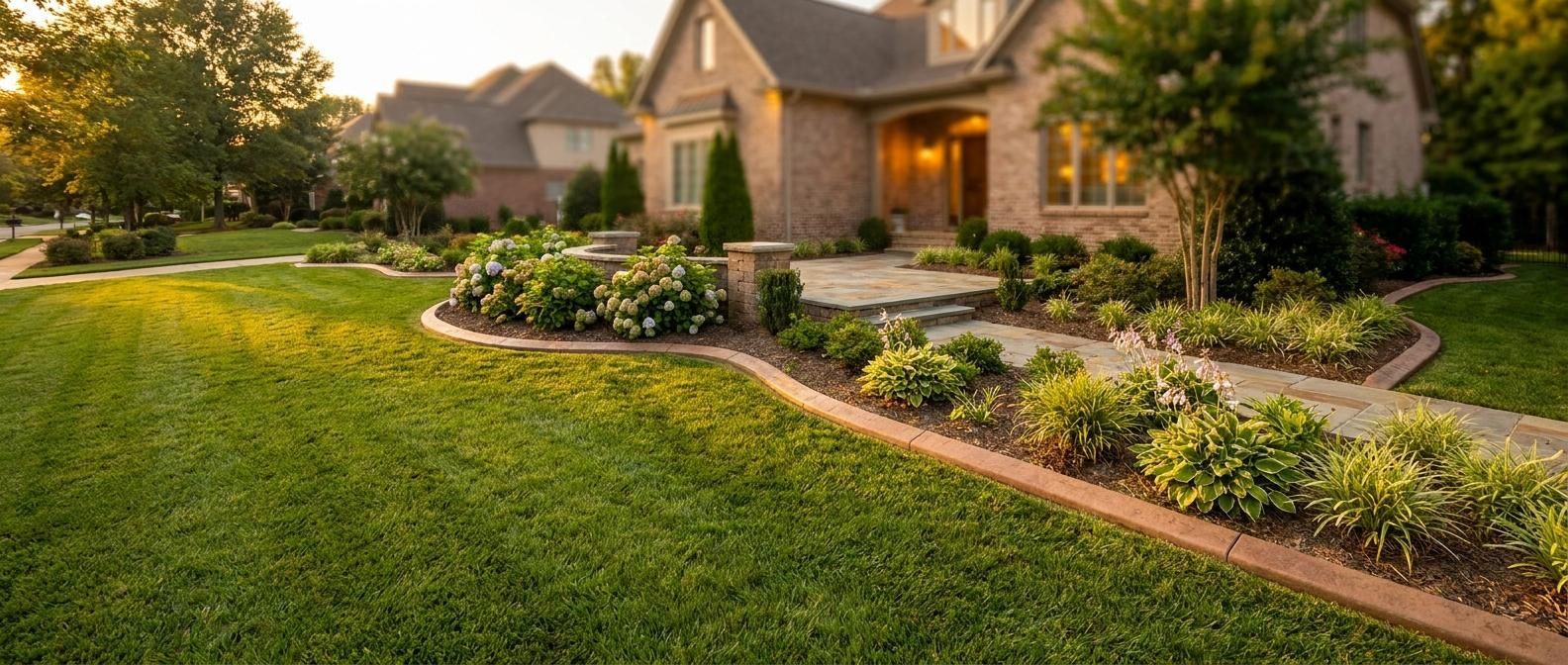
Every type of edging has the same trade-off: spend less now and replace it sooner, or spend more now and keep it for decades. The right choice depends on how long you want the border to last. For a quick, temporary line, cheap materials are fine. For an edge that holds throughout Charlotte's clay soil, heat, and aggressive grass, a seamless concrete curb gives you the most years for your money.
Want to compare a permanent border against your other options? Request a free curbing estimate or call (704) 995-6939 to talk it through with the Everedge team.