

Continuous Concrete Curbing: Why Seamless Borders Work Best
Continuous concrete curbing is a landscape border extruded as one unbroken ribbon of concrete, with no joints, seams, or separate blocks anywhere along its length. A curb machine lays it in a single flow that follows the exact line of your beds, so there are no gaps where grass can push through or where sections can drift apart over time. Everedge Curbing installs this seamless concrete edging across Charlotte, usually wrapping a whole yard in a single day.
It's easy to assume that any concrete border is basically the same once it's in the ground, but how it's formed changes everything. Segmented edging, whether blocks, pavers, or short poured sections, leaves a joint every few feet, and every joint is a weak point. A continuous curb has none. This post explains why those missing joints matter, where seamless edging outlasts the alternatives in Charlotte's clay and heat, and which parts of your yard benefit most.
What Makes Continuous Curbing Different From Segmented Edging?
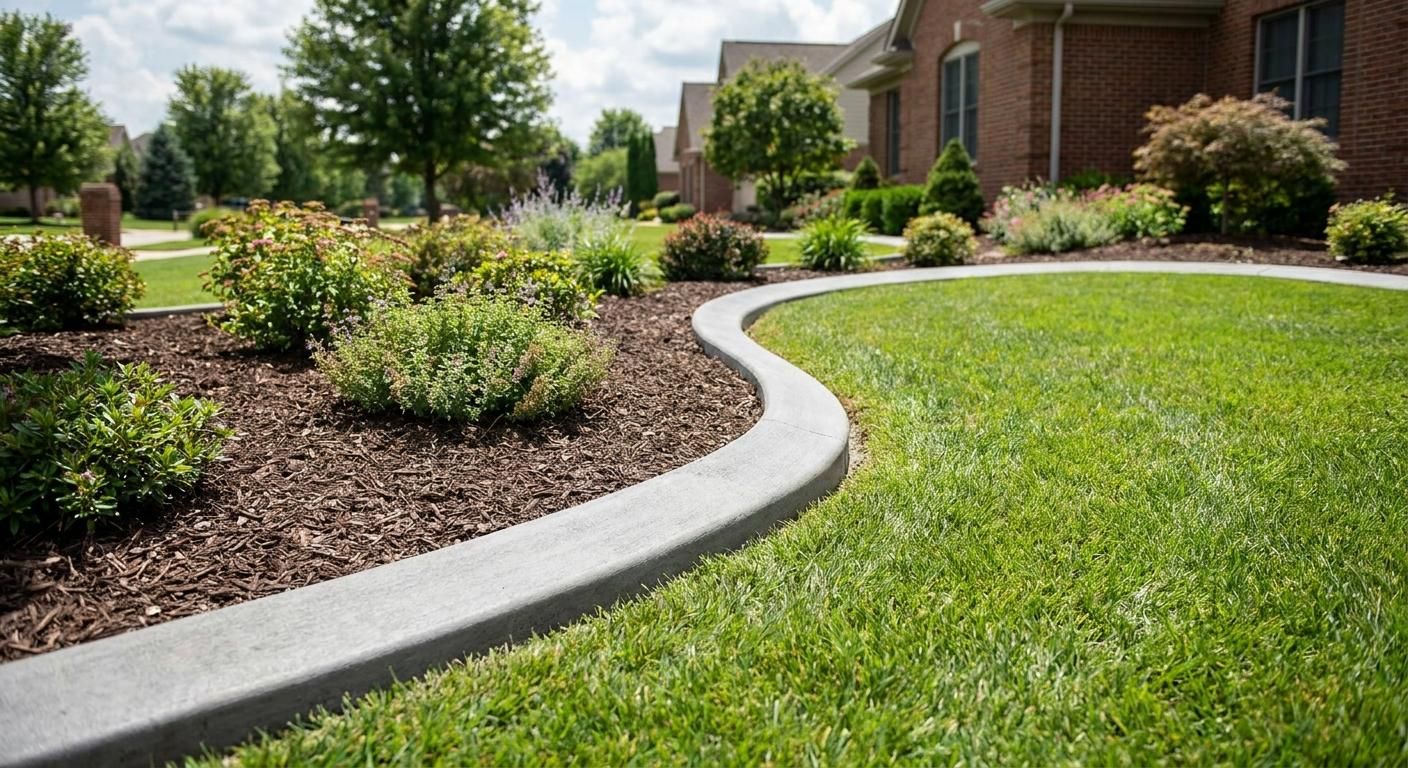
The difference comes down to how the border is formed. Segmented edging, whether interlocking blocks, pavers, or short poured sections, is assembled from many separate pieces, and every seam between them is a weak point.
Continuous curbing is extruded in one motion, so the border is a single solid piece from start to finish. There are no butt joints to separate, no blocks to tilt, and no straight-only runs; the ribbon bends smoothly around any walkable curve. That single-piece construction is also what makes the full range of stamped concrete curbing styles possible, since one continuous ribbon can be textured, curved, and colored in ways segmented blocks can't.
Why Seamless Borders Hold Up Better in Charlotte
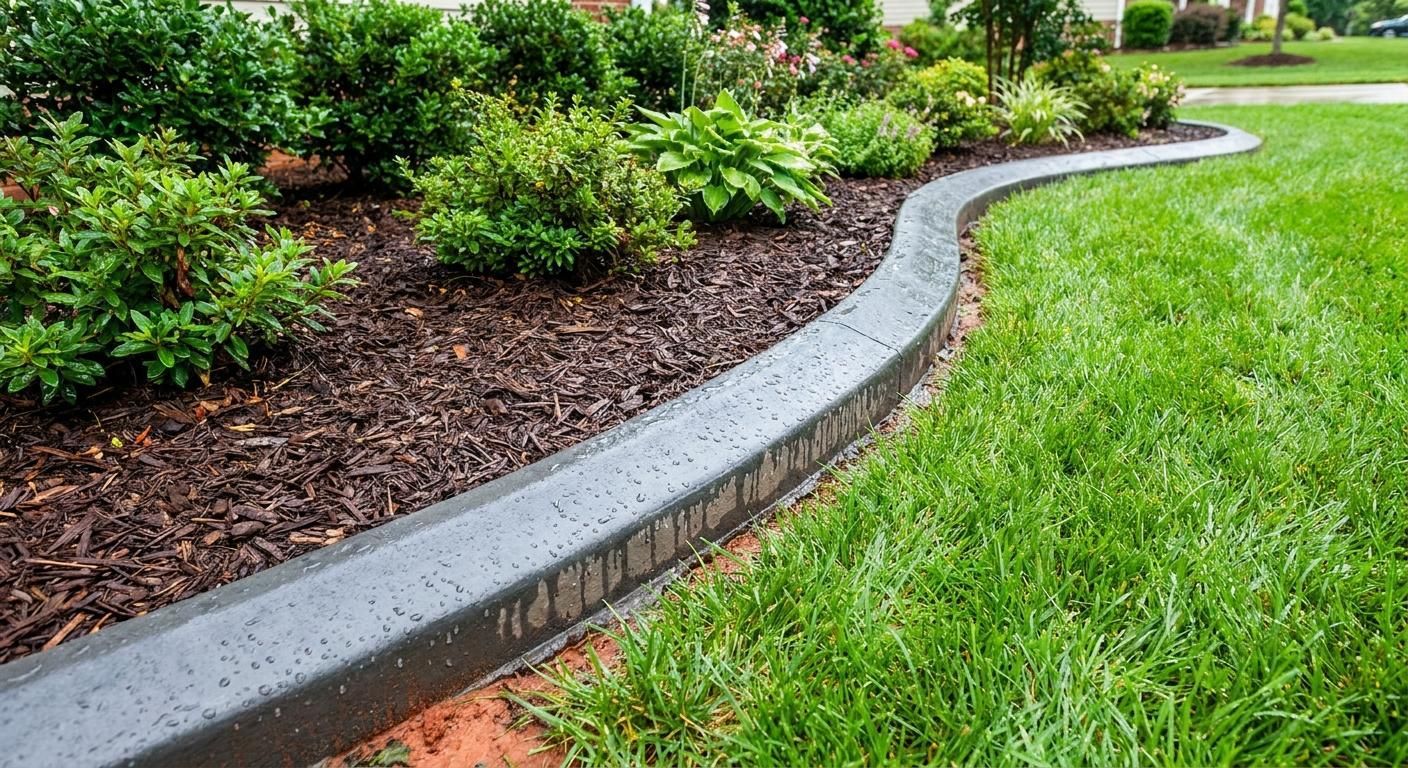
Charlotte's climate and soil are hard on segmented edging in particular, and a seamless curb sidesteps the usual ways borders fail here:
- No joints means Bermuda grass and weeds have no gaps to creep through into your beds.
- A single ribbon cannot shift apart or heave unevenly the way separate blocks do in the Piedmont's expanding red clay.
- Water sheets off a solid border instead of working into seams and undermining the edge during summer downpours.
- There is nothing to re-level or re-seat each spring, so the border stays put for decades with minimal upkeep.
Those are the same durability gaps that show up when you compare other popular landscape edging materials that must withstand Charlotte’s heat, humidity, and clay soil.
Where Continuous Curbing Works Best
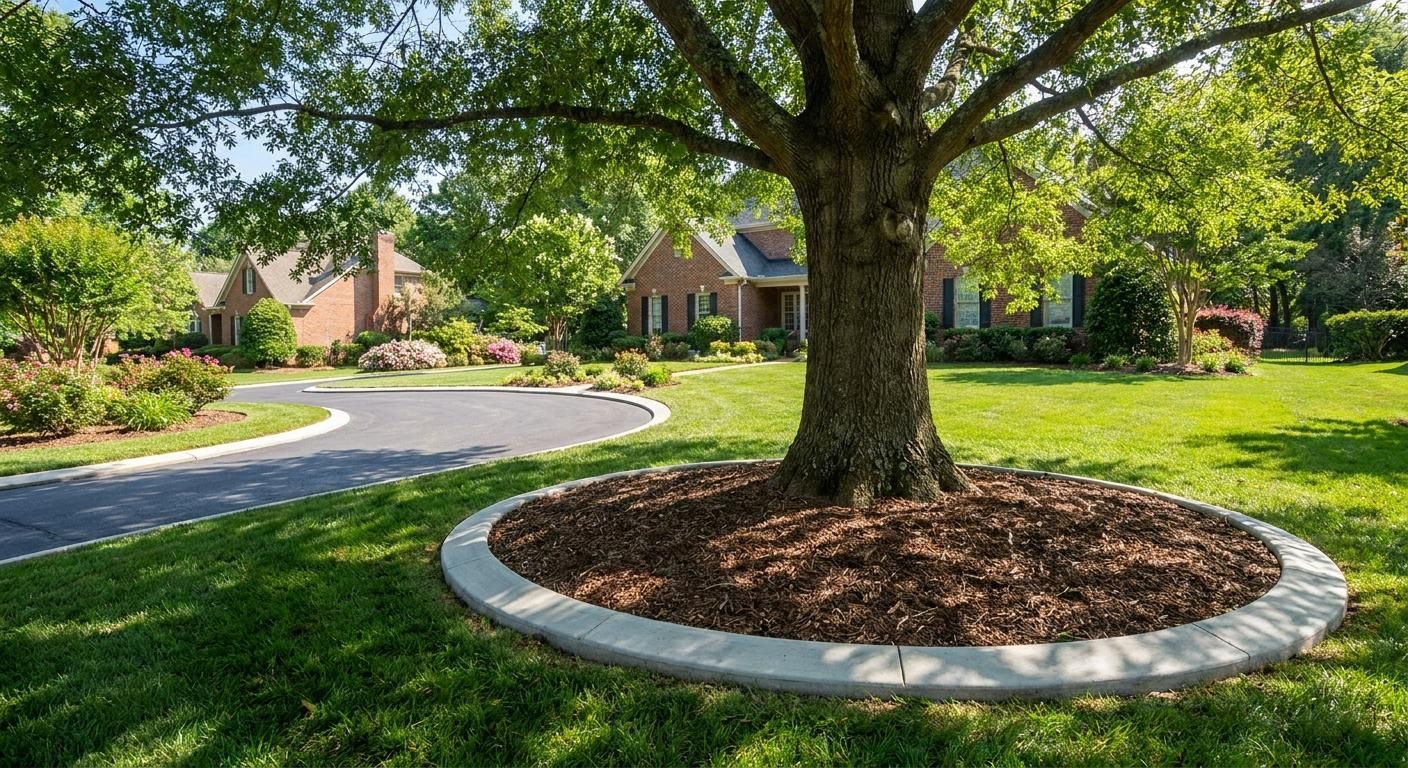
Because the ribbon follows any line, continuous curbing fits nearly every part of a yard:
- Curved flower beds and freeform island plantings, where the border flows smoothly instead of stepping around in short straight pieces.
- Tree rings, where one seamless circle keeps mulch in and grass out without disturbing the roots.
- Driveway and walkway edges that need a crisp, permanent line able to take a mower wheel.
- Mulch and gravel beds, where a solid lip holds material in place through heavy rain.
Ultimately, continuous curbing eliminates the weak spots common in traditional edging. By wrapping perfectly around everything from delicate flower beds to heavy-traffic walkways, this single, solid border keeps your entire landscape contained and looking sharp. It’s a one-time upgrade that permanently reduces your yard work, giving your property a clean, professionally manicured look that lasts season after season.
Frequently Asked Questions
Is continuous concrete curbing better than block or paver edging?
For permanence and weed resistance, continuous curbing has a clear edge. Block and paver edging rely on joints that eventually separate, shift, or let grass through, while a seamless extruded curb is one solid piece with no gaps. The trade-off is that curbing is installed by a crew rather than as a do-it-yourself kit.
How long does continuous concrete curbing last?
A properly installed and sealed continuous curb lasts for decades, well beyond plastic or metal edging that warps and rusts. Resealing every two to three years protects the surface from Charlotte's UV and moisture and keeps the color looking fresh through the years.
Can continuous curbing follow curves and circles?
Yes, following curves is its main advantage. Because the concrete is extruded in one continuous flow, the border bends smoothly around rounded beds, tree rings, and freeform islands with no segmented corners. Tight circles and sweeping curves come out equally clean.
Why Seamless Is the Smarter Border for Your Yard

The value of continuous curbing is everything it leaves out: no joints, no shifting blocks, and no gaps for the lawn to exploit. That single seamless ribbon follows your beds exactly and holds that line through Charlotte's clay, heat, and downpours for years rather than seasons.
Thinking about a seamless border for your yard? Request a free curbing estimate or call (704) 995-6939 to map out the project with the Everedge team.