

How Long Does Concrete Curbing Last?
How long does concrete curbing last? Professionally installed concrete curbing typically lasts 20 years or more with basic maintenance. Its lifespan depends on the quality of the concrete mix, whether fiber reinforcement was incorporated, the placement of expansion joints, and whether it was consistently maintained with resealing. Everedge Curbing installs fiber-reinforced concrete borders for Charlotte-area homeowners that are designed to withstand decades of Carolina weather.
After installing curbing across hundreds of Charlotte properties, one pattern stands out clearly: the curbing that lasts the longest isn't always the most expensive. It's the curbing that gets resealed on schedule. Homeowners who follow a simple two- to three-year resealing cycle consistently see their borders outlast those of neighbors who skip that single maintenance step.
What Determines Concrete Curbing Lifespan?
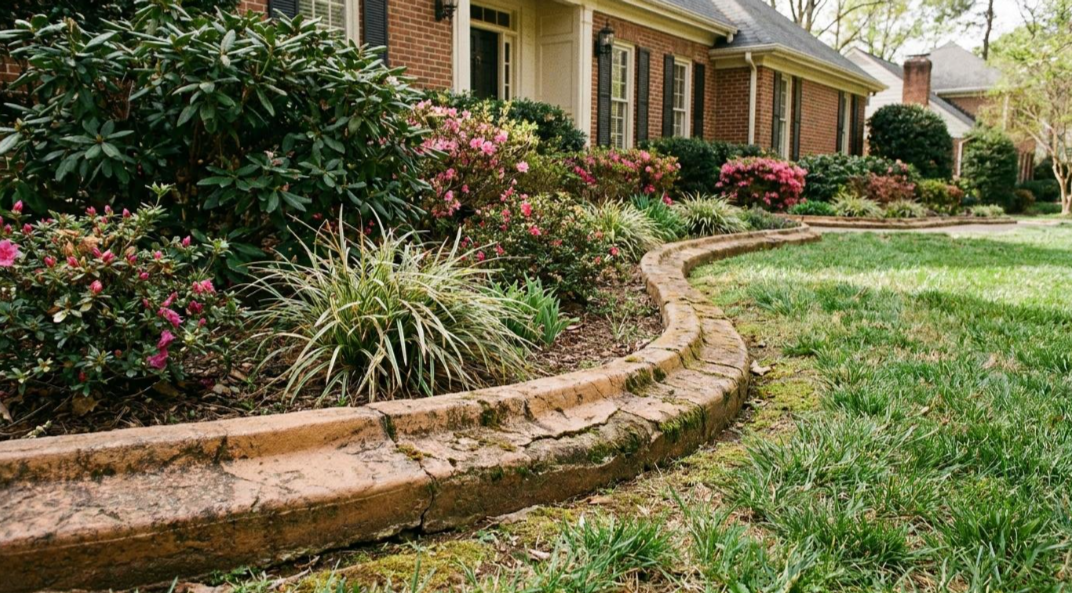
Concrete mix quality, joint placement, and fiber reinforcement are the three installation choices that most affect how long your curbing holds up.
Concrete Mix and Fiber Reinforcement
Everedge Curbing mixes premium-grade concrete on-site with fiber reinforcement throughout the mix. The fibers distribute tensile strength throughout the entire curbing body, reducing the likelihood of hairline cracks caused by ground movement or temperature shifts. This is a meaningful upgrade over unreinforced curbing, which relies solely on the concrete's compressive strength.
Expansion Joints
Strategic expansion joints are installed to accommodate natural ground movement. Charlotte's Piedmont red clay expands when saturated and contracts during dry spells. Without properly spaced joints, that seasonal soil movement transfers stress directly into the curbing. Joints absorb the movement, so the concrete doesn't have to.
How North Carolina's Climate Affects Curbing Durability
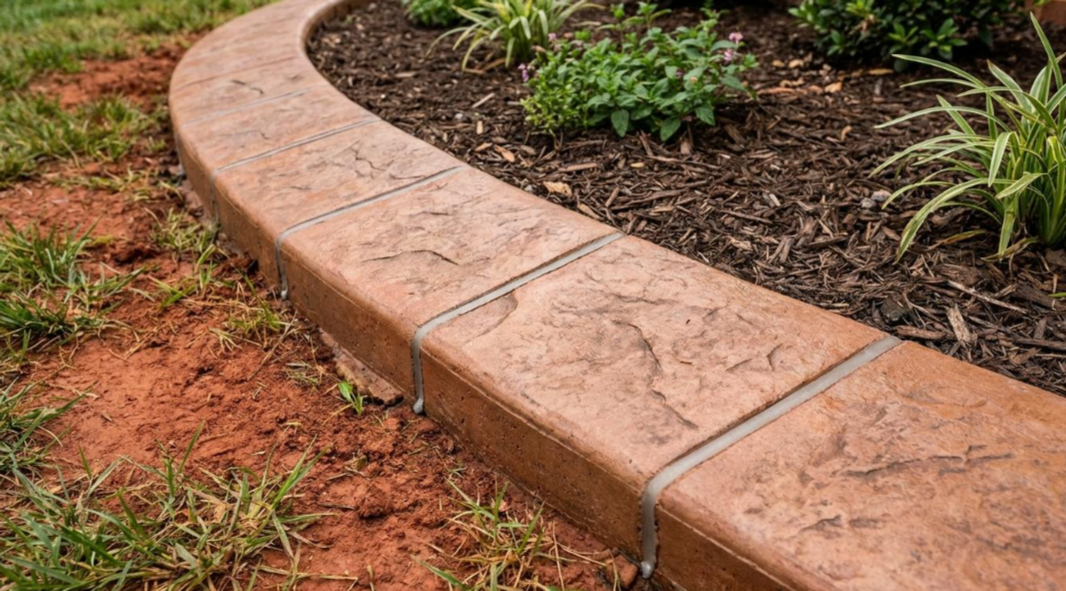
Charlotte's weather shapes how long your curbing lasts, and three seasonal factors in particular determine whether it holds up for decades or shows wear within years.
Summer UV Exposure
Summer UV exposure breaks down unprotected concrete surfaces over time, causing color fade and surface chalking. Charlotte averages over 210 sunny days per year, which means curbing receives significant cumulative UV exposure. Professional-grade sealers block UV penetration and preserve the integral color beneath.
Heavy Rainfall and Drainage
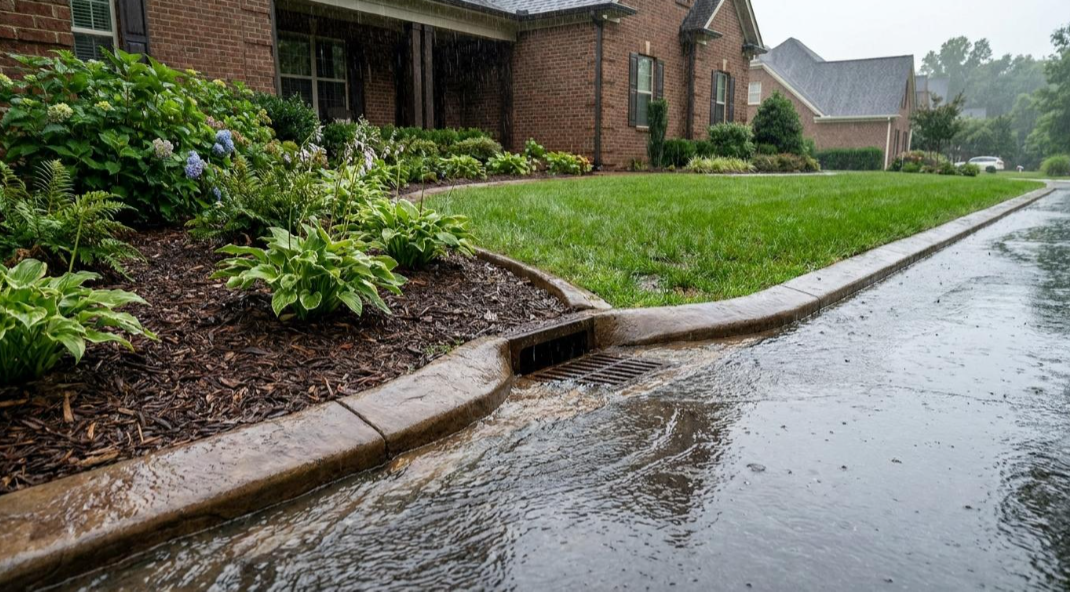
Heavy rainfall tests drainage and mulch containment. Charlotte receives about 43 inches of rain annually, with intense summer thunderstorms that dump inches in a single event. Properly installed curbing actually improves drainage by directing water along defined channels rather than letting it sheet across garden beds.
Winter Freeze-Thaw Cycles
Occasional winter freezes create expansion and contraction stress. While Charlotte doesn't experience the deep freeze cycles of northern states, temperatures do drop below freezing multiple times each winter. Fiber reinforcement and expansion joints work together to handle these temperature swings without cracking.
How Sealing Extends Curbing Life
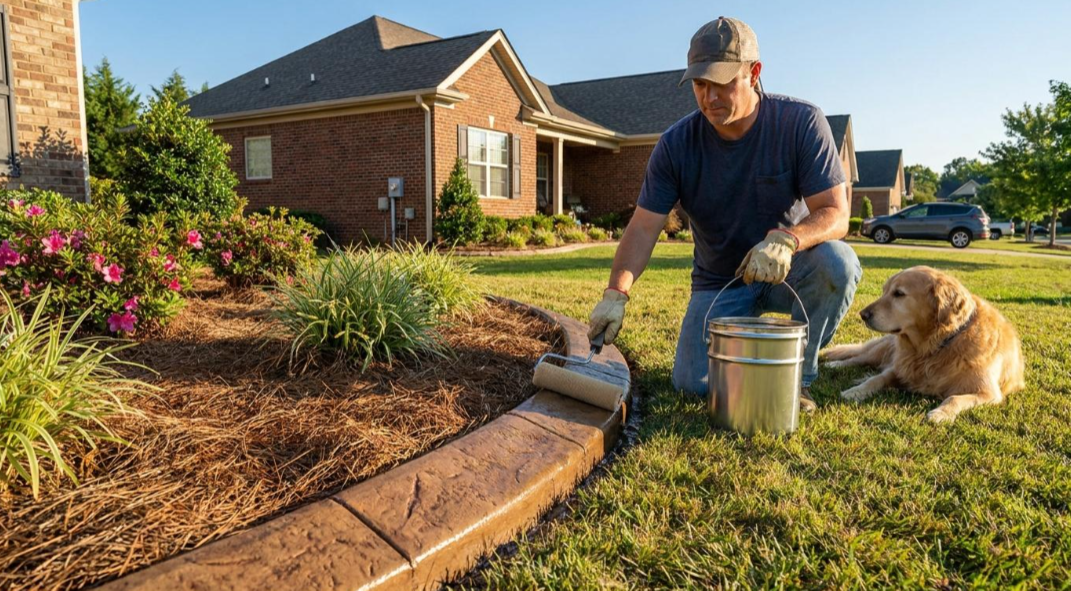
Resealing every two to three years is the single most important thing you can do to extend your curbing's lifespan. The sealer creates a protective barrier against UV rays, moisture penetration, and surface staining. Everedge Curbing applies professional-grade sealer after initial curing and offers follow-up sealing services to keep your borders protected. Learn how curbing installation sets up long-term durability from day one.
Between resealing visits, maintenance is minimal. Rinse the curbing occasionally to remove dirt and debris, and inspect the base for weed growth about twice a year. That's the full maintenance list for a product that lasts two decades or more. For answers to other common questions about installation, care, and cost, visit our FAQs page.
Frequently Asked Questions
Will concrete curbing crack over time in Charlotte's clay soil?
Properly installed curbing with fiber reinforcement and expansion joints handles Charlotte's clay soil movement without cracking. The expansion joints absorb seasonal expansion and contraction from the clay, while the fiber reinforcement distributes stress across the concrete body. Everedge Curbing places joints at engineered intervals specifically calibrated for Piedmont soil conditions.
What happens if I skip resealing for a few years?
Skipping resealing doesn't cause immediate structural failure, but the concrete surface becomes vulnerable to UV fading, moisture absorption, and surface staining. Over several years without sealer, the color dulls noticeably and the surface may develop minor pitting. Reapplying sealer can restore protection, but preventing the damage is easier and less expensive than reversing it.
Does the stamp pattern affect how long curbing lasts?
No. All stamp patterns at Everedge Curbing use the same fiber-reinforced concrete base with identical structural properties. The pattern is a surface texture applied during installation. Whether you choose Cobblestone, Flagstone, Natural Stone, or any other pattern, the underlying concrete's durability and lifespan remain the same.
Protect Your Investment for Decades
Concrete curbing's lifespan comes down to three things: quality materials at installation, proper placement of expansion joints, and consistent resealing every two to three years. Get all three right, and your curbing will define your Charlotte landscape for 20 years or longer. Skip the sealing, and you'll likely see cosmetic wear within five to seven years even if the structure holds.
Schedule a free estimate with Everedge Curbing and invest in borders built to last through decades of Carolina seasons.